Smart Casual Dress Code: Guide, Examples & Jeans Rules
Smart casual remains one of fashion’s most debated dress codes. The phrase first appeared in 1924, and people are still arguing over what it actually means. This guide cuts through the ambiguity with clear rules, a fit test for jeans, and examples for men, women, and different occasions.
Core items: blazers, khakis, button-down shirts, polos · Wikipedia definition: ambiguously defined Western dress code · Common contexts: work, restaurants, weddings · Key debate: jeans acceptability · Fit tip origin: 2 finger test for jeans
Quick snapshot
- Blazers and khakis standard (Indeed, MasterClass)
- Jeans debated but possible if fitted (MasterClass, William Henry)
- Dark-wash jeans recommended (MasterClass)
- Exact jeans rules by venue and employer
- Regional UK/Ireland differences beyond Levi’s guidance
- Term first used in 1924 (Primer Magazine)
- Modern guide published 2024 (Primer Magazine)
A quick reference table of standard smart casual items and key style principles helps anchor the definitions that follow.
| Label | Value |
|---|---|
| Standard items | blazers, sweaters, trousers, khakis, skirts, blouses, polos, dress shoes, boots |
| Ambiguity level | High, context-dependent |
| Primark view | stylish middle ground between formal and casual |
| Vogue tip | Mix casual and dressy, layer button-up |
| Jeans fit rule | slim or straight, dark-wash |
| Shoes (men) | loafers, Chelsea boots |
| Shoes (women) | loafers, flats, trainers |
What is smart casual dress code?
The term “smart casual” is notoriously ambiguous; the concern of appearing under or overdressed at a function can cause any man to sweat, according to celebrity stylist Godwin Charli. At its core, smart casual combines casual wear with smart components—think fitted clothes in muted colors with dressy accents. The approach is about looking put-together and refined while keeping the overall vibe relaxed.
Core definition from style guides
Smart casual is an approach to what to wear: creating an overall look that feels put-together, respectful, and refined, yet casual (Primer Magazine). The term first appeared in 1924 describing a sleeveless dress with overblouses for streetwear, showing how long this ambiguity has persisted. This dress code includes blazers, sweaters, trousers, khakis, button-down shirts, polos, dress shoes, and boots (Indeed).
- Blazers and sports jackets elevate casual pieces
- Dresses and sweaters soften formal components
- Clean, wrinkle-free tops like henleys work well
Smart casual vs other dress codes
Smart casual differs from business casual by incorporating more trendy pieces rather than adhering to a defined uniform like khakis and button-downs (Indeed). While business casual leans toward a consistent professional look, smart casual allows more personal expression through current styles. The key distinction: smart casual uses fashion-forward items while business casual sticks to classic professional staples.
Going too smart is always a better idea than going too casual—there’s no such thing as being overdressed, according to Jhuti’s style guide.
Are jeans ok for smart casual?
This is the question style advisors hear most often, and the answer depends heavily on context. Dark-wash, tailored, distress-free denim jeans are acceptable for smart casual (MasterClass). The key is choosing the right fit, wash, and pairing with appropriate tops and footwear.
When jeans work in smart casual
Dark indigo jeans with suede Chelsea boots and a blazer create a balanced weekend smart casual look (Phill Tarling). Jeans work for smart casual when paired with a crew neck t-shirt, blazer, and boots (Jhuti). Non-ripped dark-colored jeans are recommended for smart casual pants (Indeed). Informally, dark wash neat jeans are acceptable, but baggy jeans are unsuitable (William Henry).
- Choose straighter, slimmer fit in darker washes
- Avoid ripped, distressed, or baggy styles
- Pair with a blazer to elevate the look
- Dark jeans can work for low-key business meetings
Jeans alternatives for safer choices
Chinos or dark-wash denim jeans should be fitted but not overly tight for smart casual pants (Godwin Charli). For the formal end of smart casual, jeans are a no-no—opt for chinos or slacks instead (William Henry). Chinos or dark-wash denim should be fitted but not overly tight. In winter, wool trousers or corduroy pants work well with boots (Godwin Charli).
Levi’s UK guide specifies slimmer fit jeans for GB smart casual contexts, showing regional preferences exist even within the same language market.
What not to wear for smart casual?
Knowing what to avoid is just as important as knowing what to wear. Athletic wear, flip-flops, ripped jeans, graphic tees, hoodies, and oversized flannel all cross into too casual territory. Smart casual avoids mismatched styles like a suit jacket with casual shorts or jeans (Phill Tarling).
Common mistakes to avoid
Avoid ripped jeans, shorts, hoodies, graphic tees, and oversized flannel for smart casual (Dress4Impact YouTube). T-shirts with trainers and jeans may be too casual depending on the setting (Phill Tarling). No graphic tees or hoodies in smart casual; pieces should not be too casual or too dressy (Dress4Impact YouTube).
- Ripped or distressed jeans
- Athletic wear and flip-flops
- Graphic t-shirts and hoodies
- Shorts with blazers
- Oversized flannel shirts
What crosses into too casual
Smart casual shifts by context, but the safer approach is to be overdressed than underdressed (Jhuti). The principle: if the piece feels gym-ready or beach-ready, it probably doesn’t qualify. Clean tops like henleys, button-downs, or nice T-shirts fit smart casual (Indeed).
Overdressing shows effort and respect; underdressing can signal you didn’t take the occasion seriously—choose the safer path.
What is the 2 finger test for jeans?
The 2 finger test is a practical fit check for determining whether jeans meet smart casual standards. The concept: fitted jeans should allow approximately two fingers of space between your thigh and the fabric, ensuring a tailored look without excessive tightness.
How to apply the test
Put on your jeans and slide two fingers between your thigh and the fabric. If you can comfortably fit two fingers, the jeans have the right amount of room for smart casual. If there’s no room or the fit is skin-tight, the jeans are too slim for the dress code.
- Stand naturally and assess thigh fit
- Two fingers should fit without force
- Fabric should skim, not cling or billow
- Test both legs for even fit
Why it ensures smart casual fit
Tailored fit distinguishes smart casual from both too-tight skinny jeans and too-baggy relaxed styles. MasterClass notes that smart casual prioritizes fitted clothes, which makes the 2 finger test a useful shorthand for checking whether denim meets the standard. Chinos or dark-wash denim jeans should be fitted but not overly tight (Godwin Charli).
Tailored fit matters because too-tight jeans read as casual while too-baggy jeans undermine the polished intent of smart casual. The 2 finger test provides an objective measure that works across body types and jean styles.
Smart casual dress code for men and women
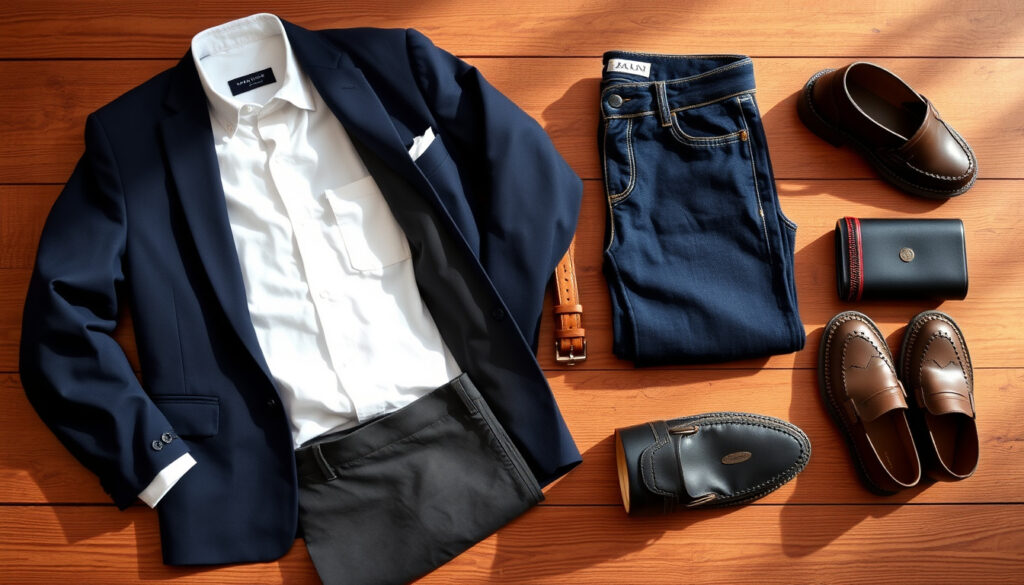
Men and women have distinct but overlapping options for smart casual dressing. The common thread: polished pieces that feel relaxed yet put-together. Smart casual wardrobe essentials include a white Oxford shirt, navy blazer, grey wool trousers, dark jeans, and leather loafers (Phill Tarling).
Outfit ideas for men
Men: chinos or trousers, button-down shirt, blazer optional, loafers or boots (overview grid plan). Well-fitting jeans, blazer, and desert boots qualify as smart casual (Primer Magazine). Slim jeans or chinos with clean sneakers and a blazer suit casual smart casual (William Henry).
- Chinos with button-down shirt and blazer
- Dark jeans with crew neck and blazer
- Wool trousers with button-down for winter
- Loafers or Chelsea boots as footwear
Outfit ideas for women
Women: blouse or sweater, skirt or trousers, blazer, dress shoes (overview grid plan). Loafers are versatile for jeans, leggings, trousers, or skirts in women’s smart casual (Jhuti). Smart casual shoes include loafers, boots, trainers, classic sneakers, and flats—no heels needed (Dress4Impact).
- Blouse with tailored trousers and blazer
- Nice sweater with dark jeans and loafers
- Skirt with button-down and flats
- Accessories like scarves and watches enhance the look
Context-specific variations
For work settings, polos are allowed and dark jeans may be acceptable depending on company culture. At restaurants, polished casual works best—avoid jeans unless the venue specifically permits them. For weddings, add layers like blazers or cardigans and skip sneakers entirely. Smart casual works for after-work drinks, networking, or office pop-ins (Jhuti).
The same outfit formula applies across contexts: one elevated piece (blazer or structured top) plus one casual piece (quality denim or chinos) equals smart casual.
How to build smart casual outfits step by step
Building a smart casual outfit follows a simple formula that works for most occasions. Here’s how to assemble pieces from your wardrobe into a cohesive look.
- Start with well-fitting trousers or jeans. Choose chinos, dark-wash jeans, or tailored trousers in muted colors. Verify fit with the 2 finger test if using jeans.
- Add a clean top. Button-down shirts, henleys, nice T-shirts, or polo shirts work well. Ensure the fabric is wrinkle-free and fits properly.
- Layer an elevating piece. A blazer, sports jacket, or structured cardigan pulls the look together and signals effort.
- Select appropriate footwear. Loafers, Chelsea boots, clean sneakers, or flats complete the look without crossing into athletic territory.
- Add one or two accessories. A watch, scarf, or subtle jewelry enhances the outfit without overdoing it.
One common mistake is mixing formal and casual pieces that don’t complement each other—like a blazer with ripped jeans or athletic shoes. Keep all pieces in the same approximate formality range.
What’s confirmed vs. unclear
Confirmed
- Blazers and khakis are standard smart casual items (Indeed)
- Dark-wash jeans are sometimes acceptable if fitted (MasterClass, William Henry)
- Smart casual differs from business casual by incorporating trendy pieces (Indeed)
- The term originated in 1924 (Primer Magazine)
Unclear
- Exact jeans rules vary by venue and employer
- Regional variations between UK and other markets need further clarification
- Whether the 2 finger test has a single authoritative source
“Smart casual is more about an approach to what to wear: creating an overall look that feels put-together, respectful, refined, yet casual.”
— Primer Magazine
“The term ‘smart casual’ is notoriously ambiguous; the concern of appearing under or overdressed at a function can cause any man to sweat.”
— Godwin Charli, Celebrity Stylist
“Going too smart is always a better idea than going too casual—there is no such thing as being overdressed.”
— Jhuti, Style Guide
Related reading: job interviews · RSVP etiquette
Related coverage: smart casual guide fördjupar bilden av Smart Casual Dress Code: Guide, Rules, Examples & Tips.
Frequently asked questions
What does smart casual mean for offices?
In offices, smart casual typically means polished separates like chinos, button-downs, and blazers. Dark jeans may be acceptable depending on company culture. The key is looking put-together while remaining comfortable for a workday.
Can you wear sneakers in smart casual?
Clean, classic sneakers can work for smart casual if they are in good condition and paired with more formal pieces like blazers or tailored trousers. Athletic sneakers or worn trainers should be avoided.
What shoes fit smart casual?
For men, loafers, Chelsea boots, and dress shoes work well. For women, loafers, flats, and clean trainers are appropriate. The key is ensuring the footwear looks polished, not worn or athletic.
Is a polo shirt smart casual?
Yes, polo shirts are commonly accepted as smart casual, especially in workplace settings. Choose quality fabrics and ensure the fit is tailored without being tight.
How to dress smart casual for a wedding?
For smart casual weddings, add layers like blazers or cardigans. Women can wear dresses with structured tops while men can pair blazers with tailored trousers. Avoid jeans unless specifically invited.
What is smart casual in UK style?
UK smart casual often emphasizes tailored dark jeans and slimmer fits. Levi’s UK guide specifies straighter, slimmer fit jeans for smart casual contexts, reflecting British preference for a neater silhouette.
Are chinos required for smart casual?
Chinos are a safe choice but not strictly required. Dark-wash jeans that pass the fit test, tailored trousers, and structured skirts can all work depending on the occasion and how they are styled.
More related posts
 Tsunami Warning Today Live – Current Status & Alerts
 Ulta Beauty Near Me: Locations, Hours, Prices, and Services
 Air Conditioning Repair Services: Costs & When to Replace
 Vox Machina Season 3: Release, Episodes, Cast & Season 4
 Storage Facilities Near Me: Dublin Prices & Cheap Alternatives
 Toxic Shock Syndrome Symptoms – Early Signs, Causes, Treatment
 90 Days From Today – Calendar and Business Days Guide
 Low Taper Textured Fringe: Complete Guide & Fade Options