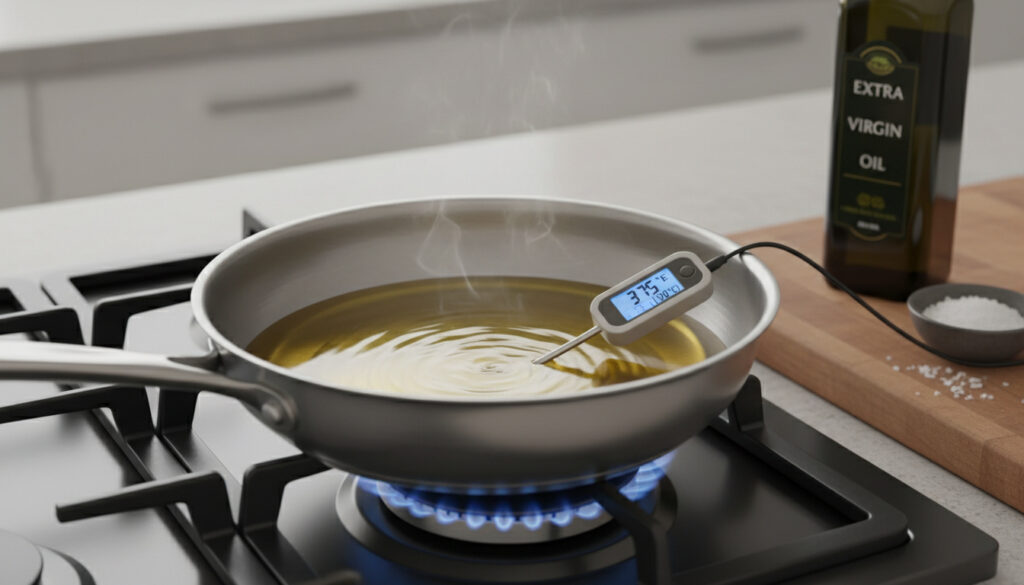
Olive Oil Smoke Point – Temperatures for Safe Cooking
The smoke point of olive oil varies significantly depending on quality and processing methods. Extra virgin varieties typically tolerate heat up to 410°F (210°C), while refined iterations withstand temperatures reaching 470°F (243°C), making the distinction crucial for safe cooking practices.
Understanding these thermal thresholds prevents the degradation of flavor and nutritional value. When oil exceeds its smoke point, it generates visible vapor and potentially harmful compounds like acrolein, signaling chemical breakdown.
According to industry standards, selecting the appropriate grade for specific cooking methods ensures both safety and culinary quality.
What Is the Smoke Point of Olive Oil?
- Free fatty acids determine stability: Lower acidity (0.2–0.8%) in fresh EVOO allows higher heat tolerance before smoking begins.
- Refinement removes protective compounds: Processing strips antioxidants but eliminates impurities, raising the smoke threshold significantly.
- Quality varies by batch: Even within extra virgin categories, smoke points fluctuate between 350°F and 410°F based on harvest freshness and storage conditions.
- Visual cues indicate danger: Smoke emission signals the release of acrolein and degraded flavor compounds.
- Standard cooking stays below limits: Sautéing occurs around 248°F, while baking rarely exceeds 356°F, well within safe ranges for most olive oils.
- Monounsaturated fats provide stability: Oleic acid constitutes 70–80% of olive oil composition, resisting oxidation better than polyunsaturated alternatives.
| Oil Type | Smoke Point (°F) | Smoke Point (°C) | Best Culinary Applications |
|---|---|---|---|
| Extra Virgin Olive Oil | 350–410 | 177–210 | Sautéing, roasting, baking, dressings |
| Virgin Olive Oil | ~410 | ~210 | Moderate frying, general cooking |
| Refined/Pure Olive Oil | 390–470 | 199–243 | High-heat frying, searing, stir-frying |
| Extra Light Olive Oil | 390–470 | 199–243 | Deep frying, neutral-flavor cooking |
Extra Virgin vs Refined Olive Oil Smoke Points
Processing methods create distinct thermal profiles. Unfiltered extra virgin oil contains polyphenols and minor compounds that burn at lower temperatures, while refined versions undergo heating and filtering that extend their utility.
The Extra Virgin Threshold
Premium extra virgin olive oil maintains stability up to 410°F when fresh. High-quality batches with low free fatty acid content resist breakdown longer, though older or poorly stored bottles may smoke at 350°F.
How Refinement Extends Heat Tolerance
Refined olive oil undergoes processing that removes free fatty acids and impurities. This elimination raises smoke points to 390–470°F, comparable to extra light varieties designed specifically for high-temperature applications.
Fresh EVOO contains natural antioxidants that actually protect against oxidation during initial heating, though these beneficial compounds diminish as the oil ages or when exposed to light.
Can You Safely Fry or Sauté with Olive Oil?
Home cooking rarely reaches temperatures that compromise olive oil integrity. Shallow frying typically occurs at 350–375°F, while sautéing stays near 248°F, both safely within extra virgin limits.
Matching Oil to Cooking Method
For techniques requiring sustained high heat, refined olive oil offers greater safety margins. Deep frying at 320–356°F remains viable with refined grades, though extra virgin handles these temperatures only briefly before degradation accelerates.
Those exploring alternative cooking methods might consider how different foods respond to controlled heat. For rapid reheating of slices, see our guide on Reheat Pizza in Air Fryer.
Recognizing Danger Signs
Visible smoke indicates immediate chemical changes. Beyond this threshold, nutritive value drops rapidly, and acrolein formation creates respiratory irritants. Refined varieties delay this breakdown, making them preferable for extended frying sessions.
Why Does Olive Oil Smoke and What Does It Mean?
Chemical Breakdown Mechanisms
Smoke emission occurs when thermal energy breaks triglycerides into free fatty acids and glycerol. The smoke point marks the transition from stable liquid to decomposing fat, releasing volatile compounds that affect both flavor and air quality.
Comparison with Avocado Oil
Avocado oil generally exceeds olive oil in heat tolerance. Unfiltered avocado varieties smoke around 392°F, while refined versions reach 520–570°F. This spectrum makes avocado oil preferable for extreme high-heat tasks, though olive oils provide superior flavor profiles for moderate temperatures.
Exceeding any oil’s smoke point generates potentially harmful byproducts. While flash point (ignition) occurs approximately 100°F above smoke point, the smoke itself indicates nutrient degradation and flavor compromise.
Olive oil’s high monounsaturated content (70–80% oleic acid) creates natural resistance to oxidation, explaining why lower-quality olive oils often outperform polyunsaturated alternatives like sunflower or soybean oil despite similar smoke point ratings.
What Happens When Olive Oil Heats Up?
- Below Smoke Point (Up to 350–410°F): Oil remains stable, retaining antioxidant properties and flavor integrity. Ideal for sautéing and gentle roasting.
- At Smoke Point (350–410°F EVOO, 390–470°F Refined): Chemical decomposition accelerates. Free fatty acids volatilize, creating visible smoke and acrolein. Nutrient degradation begins.
- Beyond Smoke Point: Rapid breakdown produces bitter flavors, harmful compounds, and potential fire hazards as the oil approaches flash point. Immediate removal from heat recommended.
Established Facts vs. Ongoing Questions
| Well-Established | Uncertain or Variable |
|---|---|
| EVOO range: 350–410°F; Refined: 390–470°F | Precise smoke points for specific regional varietals (Spanish vs. Italian) |
| Lower free fatty acids correlate with higher smoke points | Exact FFA thresholds required for specific temperature guarantees |
| Refinement consistently raises smoke points by removing impurities | Long-term health impacts of occasional smoke point exceedance |
| Storage in cool, dark conditions maintains quality | Quantified degradation rates for partially used bottles |
Understanding Smoke Point in Culinary Practice
Professional kitchens and home cooks utilize smoke point data to preserve both nutritional value and taste. Mediterranean cooking traditions historically relied on extra virgin olive oil for moderate-heat sautéing, while modern refined options expand applications to searing and deep frying.
Storage conditions critically influence performance. Cool, dark storage prevents oxidation that lowers effective smoke points prematurely. Rancid oil burns at substantially lower temperatures than fresh equivalents, regardless of original grade.
For consumer perspectives on kitchen equipment and cooking techniques, see Google Reviews by Me.
Expert Perspectives on Olive Oil Heat Stability
High-quality EVOO with low free fatty acid content reaches up to 410°F, making it suitable for most home cooking applications including shallow frying.
— Olive Oil Lovers Technical Analysis
No evidence supports widespread toxicity myths; smoke point concerns are overstated for typical use when temperatures remain below 410°F.
— About Olive Oil Research
Key Takeaways for Cooking with Olive Oil
Selecting olive oil by smoke point ensures culinary success: extra virgin varieties excel up to 410°F for roasting and sautéing, while refined options handle 470°F for intensive frying. Freshness and storage matter as much as grade, with cool, dark preservation maintaining thermal stability. Match the oil to the method, monitor for visual smoke signals, and prioritize recent harvest dates for maximum heat tolerance.
Frequently Asked Questions
What is the flash point of olive oil compared to its smoke point?
Flash point occurs approximately 100°F above smoke point, representing ignition temperature rather than breakdown threshold. While smoke points range 350–470°F, ignition requires significantly higher sustained heat.
Does storing olive oil affect its smoke point?
Yes. Exposure to light, heat, or oxygen accelerates oxidation, creating rancidity that lowers the effective smoke point. Store in cool, dark locations to maintain original thermal tolerance.
What is the smoke point of olive oil in Celsius?
Extra virgin olive oil ranges 177–210°C, while refined varieties tolerate 199–243°C. Virgin olive oil typically withstands approximately 210°C.
Why does extra virgin olive oil smoke at lower temperatures than refined?
Natural compounds including polyphenols and minor components burn at lower temperatures than the purified triglycerides remaining after refinement. These compounds provide flavor but reduce thermal ceiling.
Is olive oil toxic when it reaches smoke point?
No evidence supports toxicity myths for occasional use. However, exceeding smoke point degrades nutrients and produces acrolein, an irritant affecting flavor and air quality. Avoid repeated use of overheated oil.
Can I mix extra virgin and refined olive oil for higher heat tolerance?
Blending raises the average smoke point slightly, but remains limited by the lower-temperature component. For consistent high-heat cooking, using 100% refined oil proves more reliable than mixing.
Does the color of olive oil indicate smoke point capability?
No direct correlation exists. Chlorophyll content affects color but not thermal stability. Focus on acidity levels, freshness dates, and refinement status rather than visual hue.
More related posts
 Major Depressive Disorder Symptoms: Full DSM-5 List
 When Is Mother’s Day 2025? US vs UK Dates
 Star Trek: Strange New Worlds Season 3 Release, Renewal & Ending
 Dodgers vs Toronto Blue Jays Match Player Stats: Game 4
 Ashton Jeanty NFL Draft: Raiders Pick at No. 6
 W-9 Form 2025 – Official IRS PDF Download Guide
 Sunrise Airways Domestic Flights Canceled: What You Need to Know
 Spectrum Customer Service Number – Official Numbers and Hours