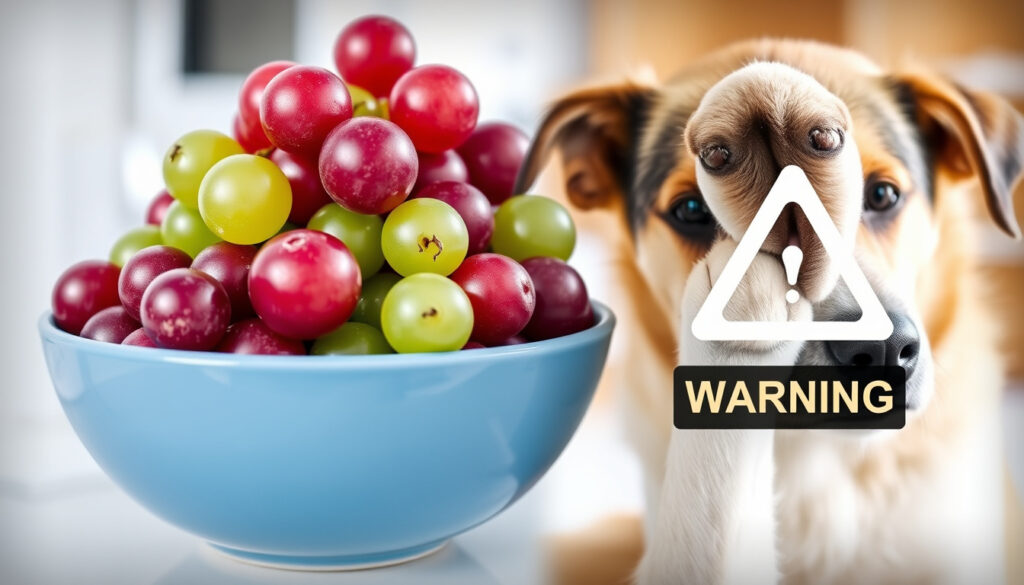
Are Grapes Bad for Dogs? Toxicity, Risks & Symptoms
Few pet owners expect a single grape to be a medical emergency, but for dogs, this fruit comes with an outsized risk. While one grape can trigger a complex toxic reaction that may end in kidney failure, the exact substance responsible has stayed frustratingly out of reach for researchers.
Grape toxicity to dogs: Yes — all types toxic · Kidney failure risk: High, even from small amounts · Symptoms appear within: 6–12 hours · Toxic dose: Unknown; varies per dog · First step if ingested: Contact veterinarian immediately · Treatment success rate: High with early intervention
Quick snapshot
- All grape varieties are toxic to dogs (Cornell Riney Canine Health Center)
- Kidney failure is a possible outcome, even with small amounts (ASPCA) (Cornell Riney Canine Health Center)
- Clinical signs can appear within 6–12 hours (Vet Times)
- Immediate veterinary intervention is critical (Pet Poison Helpline)
- The exact toxic dose remains unknown and varies per dog (Vet Times)
- The specific chemical compound responsible for toxicity has not been identified (Cornell Riney Canine Health Center)
- Why some dogs show no reaction while others become severely ill is not understood (Pet Poison Helpline)
- Vomiting or diarrhea within 6–12 hours of ingestion (Vet Times)
- Signs of acute renal failure may develop within 24 hours or several days later (ASPCA)
- Blood chemistry monitoring recommended for 72 hours (ASPCA)
- Contact your vet or a pet poison helpline immediately; do not wait for symptoms (Pet Poison Helpline)
- Treatment may include decontamination, IV fluids, and kidney monitoring (Cornell Riney Canine Health Center) (Pet Poison Helpline)
- Early intervention leads to a generally good prognosis (ASPCA) (Pet Poison Helpline)
Key facts at a glance
The table below summarizes the critical facts every dog owner should know.
| Toxic to dogs | Yes |
|---|---|
| Toxic to cats | Yes (less common) |
| Exact toxin identified | No |
| Risk of acute kidney injury | High |
| Treatment window | Within 2 hours for best outcome |
| Prognosis with early treatment | Generally good |
The toxin is lethal for some dogs, yet its identity has evaded researchers for decades, making every exposure a guess about severity.
What happens if my dog eats one grape?
The short answer is that even a single grape can be a medical emergency, but the outcome is not a foregone conclusion. Veterinary toxicologists at the Cornell Riney Canine Health Center (canine health research center) report that while some dogs appear unaffected, others develop severe, potentially fatal kidney damage. The Vet Times (veterinary trade publication) notes that the onset and severity of poisoning are unpredictable, which makes immediate action your only reliable play.
Symptoms of grape poisoning
- Vomiting and diarrhea are the most common early signs, often appearing within 6–12 hours (Vet Times).
- Lethargy, anorexia, and abdominal pain follow as the toxin takes hold (Merck Veterinary Manual (veterinary clinical reference)).
- Increased thirst and urination, or a sudden lack of urination, can signal kidney injury (Vet Times).
Toxic dose: is one grape dangerous?
The concept of a “safe” dose is a myth. The ASPCA (animal poison control authority) and other veterinary bodies advise that any amount, from a single grape to a whole punnet, carries risk. Because the toxin remains unidentified, veterinarians can’t provide a per-kilogram calculation. In practice, the Pet Poison Helpline (canine toxicology hotline) warns that some dogs have died after a single grape, while others have eaten an entire bunch and survived—a variability that no test can predict.
Since the lethal dose varies unpredictably, every grape counts as a potential emergency, regardless of your dog’s size or breed.
The pattern here is clear: the absence of a known toxin means there is no known safe threshold. The implication for owners is that any ingestion demands a call to a vet, not a wait-and-see approach.
What fruit is toxic to dogs?
Grapes sit atop a short list of fruits that are unequivocally dangerous for dogs. While apples and blueberries are safe in moderation, grapes and raisins are in a category of their own due to their link to acute kidney failure, which the Cornell Riney Canine Health Center confirms.
Grapes and raisins
- Grapes are the most commonly known toxic fruit for dogs, and raisins (dried grapes) are even more concentrated per weight (Cornell Riney Canine Health Center).
- Grape toxicity is unique because the exact toxin is unknown, yet the clinical consequence—kidney failure—is consistent (Cornell Riney Canine Health Center).
What are 13 human food toxic to dogs?
The list of foods that move from table scrap to emergency is longer than most owners expect. Grapes and raisins are included, as are other staples that can cause anything from stomach upset to fatal organ failure.
The 13 foods: grapes, chocolate, xylitol, onions, garlic, etc.
- Chocolate, xylitol, onions, garlic, and macadamia nuts round out the most frequently cited offenders.
- Grapes are the only common fruit that carries a specific, unexplained risk of acute kidney injury (ASPCA).
- Symptoms vary by toxin; for grapes, the primary risk is sudden renal failure rather than gastrointestinal distress alone (Vet Times).
Most owners know chocolate is dangerous, but few realize a single grape can be equally—if not more—perilous because the outcome is silent until kidney damage is advanced.
The takeaway from the full list is that toxicity is not always dose-dependent. For some toxins, like those in grapes, even a trace amount can trigger a chain reaction that ends in the hospital.
Why are grapes toxic for dogs but not humans?
The short answer is that researchers still don’t know, but the leading hypothesis points to a fundamental difference in how canine kidneys process certain compounds. The Cornell Riney Canine Health Center (veterinary teaching hospital) explains that although the exact culprit has not been confirmed, leading theories center on tartaric acid or a mycotoxin—a fungal compound resistant to washing.
The unknown toxin
Unlike some poisons, the toxic compound in grapes has not been isolated. This isn’t for lack of effort; it is because the chemical is likely unstable or bound to the fruit in a way that makes it hard to extract. The Vet Times (veterinary news outlet) notes that this absence of a culprit complicates diagnosis—there’s no blood test for “grape toxin,” so vets rely on history and symptoms.
Differences in metabolism
- Dogs have a unique sensitivity not present in humans, and they lack the metabolic pathway to break down the compound responsible (Cornell Riney Canine Health Center).
- This is why a food that is a healthy snack for a person can be lethal to a dog—their bodies simply cannot process it in the same way.
The trade-off here is straightforward: what is harmless to us can be a poison to them, and the lack of a clear toxic agent makes grapes the most frustrating case in veterinary toxicology.
What to do if dog eats grapes?
If you catch your dog eating grapes, the treatment window is narrow, but the steps are clear. Acting in the first two hours dramatically improves the outcome, and waiting for symptoms is the most dangerous move you can make.
Immediate steps: call your vet
- Contact your veterinarian or a pet poison hotline immediately; do not wait for symptoms to appear.
- Have your dog’s approximate weight and the number of grapes eaten on hand to give clear information.
- Do not induce vomiting unless directed by a veterinarian.
When to induce vomiting and when not to
The ASPCA (animal poison control authority) recommends emesis within the first 2 hours after exposure, but only if directed by a professional. Inducing vomiting after that window is less effective and can cause more harm in certain situations, which is why a vet’s guidance is non-negotiable.
Veterinary treatment and monitoring
The Cornell Riney Canine Health Center explains that treatment focuses on decontamination to remove remaining fruit and supportive care. This often means a hospital stay with IV fluids and monitoring for at least two days, and the ASPCA advises that blood chemistry, including renal enzymes, should be checked for 72 hours to catch delayed kidney injury.
For the dog owner, the choice is binary: a quick call to the vet or a risk of irreversible kidney failure. The Pet Poison Helpline confirms that this is one case where overreacting is the correct response.
How much is toxic and when do symptoms appear?
There is no published toxic dose, and signs can be delayed. The Merck Veterinary Manual (clinical reference for toxicology) reports that vomiting or diarrhea typically begins within 6 to 12 hours of ingestion, alongside lethargy and a loss of appetite, but more serious signs like kidney failure may not appear for 24 hours or more. The ASPCA adds that polyuria (increased urination) or a complete lack of urine is a red flag.
If your dog is drinking more than usual, appearing weak, or showing any abdominal discomfort after eating grapes, the kidney is already under stress—this is a point where hours matter.
The implication for any owner is that the absence of immediate symptoms does not mean the danger has passed. The unknown toxic dose means that even a single grape can trigger a chain of events that ends in acute kidney injury.
What to do if your dog shows symptoms
If symptoms appear before you reach a vet, the Vet Times (veterinary trade news) advises that this is not a wait-and-see situation. The signs—vomiting, lethargy, loss of appetite—are the early warnings of a possible kidney failure event. The ASPCA (animal poison control authority) notes that the progression from gastrointestinal upset to renal failure can happen within a day, and supportive care including IV fluids and sometimes dialysis is required to give the kidneys a chance to recover.
aspca.org, aspca.org, vet.cornell.edu, vetgirlontherun.com, pdsa.org.uk, petscare.com, en.wikipedia.org, aspcapro.org
Frequently asked questions
Can dogs eat seedless grapes?
No. The absence of seeds does not change the toxicity. Grapes and raisins are toxic to dogs in all forms—seedless, peeled, organic, or cooked—according to the Pet Poison Helpline.
Are organic grapes safer for dogs?
No. The toxin responsible is not a pesticide or herbicide residue; it is inherent to the grape itself. The Cornell Riney Canine Health Center states that organic grapes carry the same risk as conventionally grown ones.
Can dogs eat raisin bread or grape juice?
No. Raisin bread and grape juice are highly concentrated sources of the toxin. The ASPCA (animal poison control authority) lists both as dangerous because drying or processing does not neutralize the harmful compound.
How long after eating grapes do symptoms appear?
Clinical signs can appear within 6–12 hours of ingestion, though some dogs may not show signs for up to 24 hours. The Merck Veterinary Manual notes that symptoms include vomiting, diarrhea, and lethargy, but kidney failure can be delayed.
Can a small dog survive eating one grape?
Survival depends on prompt treatment, not just size. While a small dog is more susceptible to rapid dehydration, the Vet Times notes that any dog can recover with immediate veterinary care including IV fluids.
What is the treatment for grape poisoning in dogs?
The mainstay of treatment is decontamination—inducing vomiting if caught early—followed by supportive care. The Cornell Riney Canine Health Center recommends IV fluids and monitoring of kidney function for up to 72 hours, and in severe cases dialysis may be needed.
Are grapes bad for dogs if they are cooked?
Cooking does not break down the toxic compound. The ASPCA confirms that baked goods, jams, and sauces containing grapes contain the same toxins as fresh fruit.
Can dogs eat other fruits like apples or blueberries?
Yes, many fruits are safe in moderation. Apples (without seeds) and blueberries are low-risk, but grapes and raisins are specific exceptions that carry a high risk of acute kidney failure, as reported by the Vet Times.
Related reading
More related posts
 Quesadilla Steak Near Me: Best Cuts & Local Spots Guide
 How Long to Boil Hot Dogs – Exact Times for Fresh and Frozen
 Talamasca the Secret Order – Origins, Members and AMC Series
 Make Words with These Letters – Top Free Tools and Tips
 Labor Day Weekend 2025: Date, History, and What You Need to Know
 Cool Math Games Run 3: How to Play, Tips, and Levels
 Ashwagandha Benefits for Women: Stress, Hormones & Safety
 Greg Biffle Net Worth: How Rich Was the NASCAR Driver?