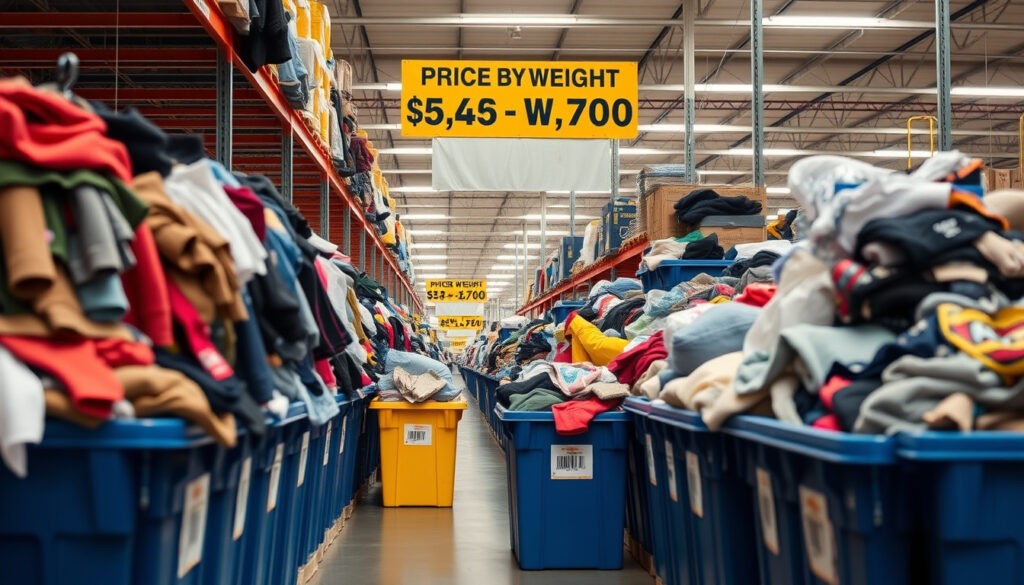
Goodwill Bins Near Me: How to Find & Shop Outlets
You’ve probably seen the bins at your local Goodwill outlet: giant blue rolling carts piled high with everything from coffee mugs to camera gear. But stepping into a Goodwill Outlet for the first time can feel a little like diving into a treasure hunt—with rules. With approximately 165 Goodwill Outlet stores across the U.S., knowing how to find and shop at the bins can make the difference between a frustrating afternoon and a serious haul.
Goodwill retail stores worldwide: over 3,200 ·
Goodwill Outlet (‘bins’) locations in the U.S.: approximately 165 ·
Typical bin pricing per pound: $1.39 – $2.99 ·
Percentage of electronics tested before sale: most outlets test, but policy varies by region
Quick snapshot
- Unsorted discount items from overstock or donations (Goodwill Cleveland)
- Priced by weight, not per item (Goodwill Cleveland)
- Found at Goodwill Outlet stores only (Goodwill Cleveland)
- Use regional Goodwill website locators (Goodwill International)
- Check community lists like r/GoodwillBins (Reddit community)
- Approximately 165 outlets across the U.S. (goodwilloutlets.com aggregator)
- Bring gloves and hand sanitizer (Hawk Hill thrifting blog)
- Arrive early for best selection (Dina’s Days community blog)
- Learn bin rotation schedule of your local outlet (Goodwill Manchester outlet guide)
- Large appliances, car seats, cribs (Goodwill national guidelines)
- Hazardous materials, paint, tires (Goodwill national guidelines)
- Some electronics may be rejected if damaged (Goodwill national guidelines)
The table below summarizes key statistics about Goodwill outlet stores.
| Fact | Details |
|---|---|
| Total Goodwill retail locations | over 3,200 |
| Goodwill Outlet (bins) locations | approx. 165 |
| Average price per pound (soft goods) | $1.39 |
| Electronics testing at outlets | Varies by region; most test, some do not |
| Items not accepted | Large appliances, car seats, paint, etc. |
What are the bins at Goodwill?
How Goodwill Outlet stores differ from regular Goodwill stores
- Goodwill Outlet stores (often called “the bins”) display unsorted goods in large wheeled bins rather than on shelves. Goodwill Industries of Greater Cleveland and East Central Ohio (official outlet page) explains that items come from overstock or donations that didn’t sell in regular stores.
- Pricing is by weight or flat fee, not per item. The same source lists rates as low as $0.89 per pound for glassware and $1.89 per pound for general wares.
- Bins are restocked continuously, and shoppers are asked to step back while new bins are brought onto the floor, per Goodwill Industries of Greater Manchester (outlet shopping guide).
Typical contents of a Goodwill bin
- You’ll find a mix of clothing, shoes, electronics, housewares, books, toys, and sometimes furniture.
- Items are unsorted, so you might unearth a vintage lamp next to a half-used candle.
- Electronics, books, and media may be priced per piece rather than by weight — for example, $0.99 per book at the Cleveland-area outlets, according to the same Goodwill Cleveland page.
The catch: you have to dig. The unsorted nature is precisely why prices stay low — but it also means you’ll need patience and a good eye.
How to find Goodwill bins near me
Using Goodwill’s official outlet locator
- Start with your regional Goodwill website. Each region runs its own site and lists its outlet centers under “Store Locator” or “Outlet Centers.” For example, Goodwill of Greater Cleveland and East Central Ohio (regional nonprofit) clearly marks its two outlet locations.
- The national Goodwill site (Goodwill Industries International (umbrella organization)) can point you to your local affiliate, which then lists specific outlet addresses.
Third-party directories and user-maintained lists
- The Reddit community r/GoodwillBins (user-run forum) maintains a state-by-state list of outlet locations, updated by shoppers.
- The site goodwilloutlets.com (aggregator) compiles addresses and hours from across the country.
Searching for ‘Goodwill Outlet’ near a specific city or state
- A simple search like “goodwill outlet near me” or “goodwill bins Phoenix” often returns local results. According to Dina’s Days (community blog), this is a practical first step.
- Because each region is independent, you may need to check the local Goodwill’s own page to confirm it’s a true by-the-pound outlet before driving there, notes Underpriced (shopping guide website).
Why this matters: not every location labeled “outlet” is a bin store. Some are clearance centers with fixed prices. Confirming before you go saves time.
How to shop at Goodwill Outlet Stores
What to bring: gloves, hand sanitizer, and a strategy
- Bring work gloves to protect your hands from sharp objects or sticky surfaces. Hawk Hill (thrifting blog) recommends inspecting items for holes, cracks, or stains before buying.
- Pack hand sanitizer and wipes — you’ll touch everything. Dina’s Days (community blog) suggests using wipes to clean off shoes or small items while you shop.
- Bring batteries to test toys or electronics, and a measuring tape if you’re after furniture, says the same source.
Understanding bin rotation and restocking schedules
- Bins are typically rotated every one to two hours. When a fresh bin arrives, shoppers are allowed to approach only after staff have moved it into place, as described by Goodwill of Greater Manchester (outlet shopping guide).
- New bins appear throughout the day, so visiting early doesn’t guarantee the best finds — patience and multiple passes matter.
Tips for scoring the best deals
- Use the “quick-grab” method: toss potentially useful items into your cart immediately, then sort them later. Hawk Hill (thrifting blog) explains this prevents losing hot items to other shoppers.
- Divide your cart by category (textiles, hard goods, electronics) before reaching the register to speed up checkout, per the same source.
- For bulk discounts, check if your outlet offers reduced rates at higher weights — e.g., $1.79 per pound for electrical items over 10 pounds at Cleveland outlets, per Goodwill of Greater Cleveland (outlet pricing page).
The trade-off: effort is high, but so are potential savings. Shoppers regularly report finding brand-name electronics and designer clothing for a fraction of retail.
The implication: with a bit of prep, you can turn a chaotic experience into a rewarding thrifting session.
What items does Goodwill not accept?
Prohibited items per Goodwill national policy
- Goodwill does not accept large appliances, car seats, cribs, paint, tires, or hazardous materials, per Goodwill Industries International (national donation guidelines).
- Electronics with cracked screens or missing components may be refused depending on local policy.
Local variations: what your nearest store may reject
- Regional Goodwill affiliates can add their own restrictions. Always check your local affiliate’s website for a complete list.
- Some outlets may accept certain items that others reject — for instance, small appliances like toasters are usually okay.
The pattern: if you wouldn’t want to buy it secondhand yourself, the store probably doesn’t want to accept it either.
Are electronics tested at Goodwill bins?
Testing policies at Goodwill Outlet vs. regular stores
- Most Goodwill Outlet stores test electronics before placing them in bins, but not all. According to r/GoodwillBins (user-run forum), policies vary by location and are set by local management.
- Items that fail testing are often sold for parts or recycled rather than placed in the bins.
How to test electronics before buying at the bins
- Some outlets provide a testing station with power outlets; others do not. Ask a staff member if you’re unsure.
- Bring a portable power bank or small plug-in tester to check devices on the spot. Dina’s Days (community blog) recommends carrying batteries for this purpose.
What this means: you can’t assume an item works just because it’s in the bin. If you can’t test it, the risk is yours — but the price often makes it worth the gamble.
Pros and cons of shopping at Goodwill bins
Upsides
- Extremely low prices: often under $2 per pound
- Treasure-hunt experience with unique, one-of-a-kind finds
- Environmentally friendly — gives items a second life
- Bulk discounts available at many locations
Downsides
- Messy, unorganized shopping environment
- No returns or warranties on purchases
- Electronics may not be tested or may be sold as-is
- Crowded and competitive during busy hours
The decision ultimately depends on your tolerance for mess and risk versus your appetite for low prices.
Step-by-step guide to shopping at Goodwill bins
- Locate your nearest outlet using the official locator or community lists.
- Check hours and pricing on the regional Goodwill website before you go.
- Prepare your gear: gloves, hand sanitizer, wipes, batteries, measuring tape, and a reusable tote for your haul.
- Arrive early or plan to stay for a while — fresh bins appear throughout the day.
- Use the “grab first, sort later” approach to secure items before they’re taken.
- Inspect each item carefully for damage or missing parts before checkout.
- Categorize your items by type (soft goods, hard goods, electronics) to speed up the weigh-in process.
- Pay by weight or flat fee — have cash or card ready; payment methods vary.
The implication: with a bit of prep, you can turn a chaotic experience into a rewarding thrifting session.
What’s still unclear about Goodwill bins
Confirmed facts:
- Goodwill bins are located exclusively at Goodwill Outlet stores. (Goodwill Cleveland)
- Prices are based on weight or flat fee. (Goodwill Cleveland)
- Goodwill does not accept large appliances, car seats, or hazardous materials. (Goodwill national guidelines)
What’s unclear:
- The exact number of Goodwill Outlet locations is not officially published.
- Whether a specific outlet tests electronics depends on local management.
- Bin rotation schedules vary by location — no centralized timetable exists.
These uncertainties mean that shopping at the bins requires local research and a flexible mindset.
Quotes from shoppers and experts
“Our outlet stores offer the same great deals you’d find in our regular stores — only the prices are even lower because items are sold by the pound.”
— Goodwill Industries of Greater Manchester, official outlet shopping guide
“The bins are a total gamble with electronics. One day I scored a working printer for a dollar; the next day I found a laptop that wouldn’t even turn on.”
— Reddit user, r/GoodwillBins
These perspectives highlight the core tension of bin shopping: the thrill of the find versus the risk of the dud.
Summary: Is visiting Goodwill bins worth it?
For budget-conscious shoppers and thrift enthusiasts, the answer is a clear yes — but only if you go prepared. The low prices are real, the selection is unpredictable, and the experience is hands-on. If you can invest a few hours and a pair of gloves, you’ll likely walk out with a cart full of items for less than the cost of a single new shirt. For the casual shopper looking for quick, curated bargains, a regular Goodwill store might be a better fit. But for those who enjoy the hunt, Goodwill bins offer an unmatched return on effort.
If you’re looking for even more ways to save, you can also find charity shops near you for clothing deals across Europe.
Frequently asked questions
Can you return items bought at Goodwill bins?
Generally, no. All sales at Goodwill Outlet stores are final. Inspect items carefully before purchasing.
Do Goodwill bins have a dressing room?
Most outlets do not provide fitting rooms. Wear easy-to-remove layers if you plan to try on clothing over your existing clothes.
How often are new bins put out at Goodwill Outlet?
Bins are typically rotated every one to two hours, but the schedule varies by location. Ask staff or observe the pattern during your visit.
Are there Goodwill bins in Europe?
No, Goodwill is a U.S.-based nonprofit. Its outlet stores are located only in the United States and Canada.
What is the best day to go to Goodwill bins?
Weekdays, especially Tuesday through Thursday, are less crowded. Some outlets restock on specific days; ask the staff for their schedule.
Can I donate items directly to Goodwill bins?
Donations are accepted at the donation center attached to most outlets, but they are processed separately from the bins.
How do I pay at a Goodwill Outlet – weight or flat fee?
Most outlets use a weight-based system for soft goods and hard goods, with per-item prices for books and electronics. Payment methods vary, so bring cash and a card.
Related reading
- CVS Near Me: Find Stores, Hours & Directions Fast — A similar “near me” locator guide for another retail chain.
- Window Tint Near Me – Shops, Costs, Laws Guide — Another “near me” guide for a different service, with a similar structure of location, costs, and policies.
More related posts
 Hayley Atwell Movies and TV Shows – Full List and Highlights
 How to Get Rid of Nausea Fast: Proven Home Remedies
 MCH Blood Test High – Causes, Symptoms & How to Lower Levels
 4 Cups to Oz: Conversion Guide (32 Ounces Fluid & Dry)
 The Mummy 1999 Cast: Fraser, Weisz, Full List & Roles
 2024 Tacoma TRD Pro: Price, Specs & TRD Off-Road Comparison
 Elon Musk and Grimes: Timeline, Children, Custody & Breakup
 What Is an Antonym – Definition, Types and Examples