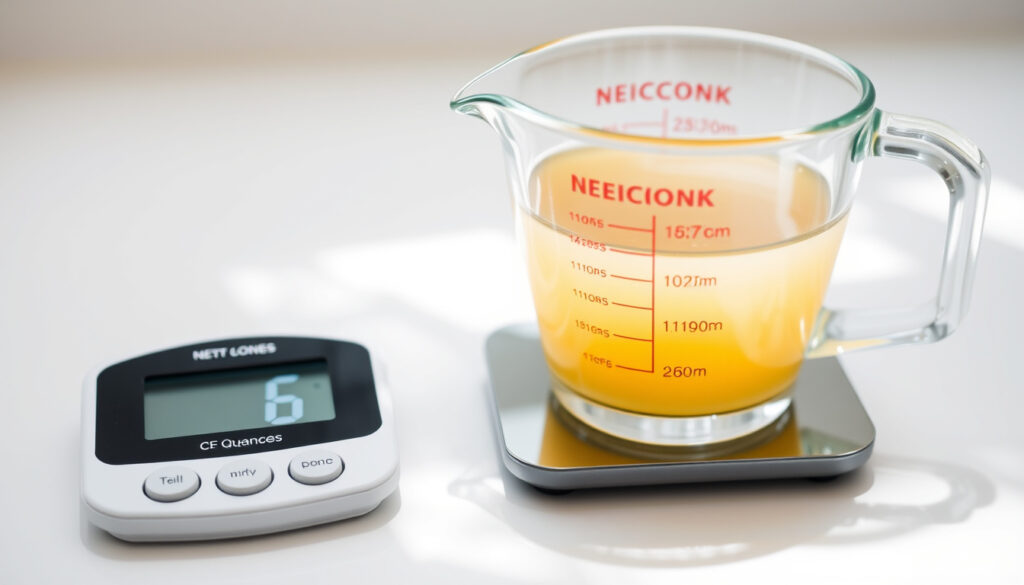
3/4 Cup to Oz Conversion Guide: How Many Ounces in 3/4 Cup
You’re following a recipe that calls for ¾ cup of milk, but your liquid measuring cup only marks ounces. Here’s everything you need to know about turning ¾ cup into fluid ounces — plus how to handle dry ingredients, UK measurements, and workarounds when your measuring cup is missing.
US cup to fluid ounces: 1 cup = 8 fl oz ·
3/4 cup to fluid ounces: 3/4 cup = 6 fl oz ·
UK cup to fluid ounces: 1 UK cup = 10 fl oz
Quick snapshot
- 1 US cup = 8 fl oz (USDA Food Buying Guide)
- 3/4 cup = 6 fl oz (Shamrock Foods Conversion Chart)
- All-purpose flour: ~3 oz (Delightful Mom Food)
- Granulated sugar: ~5.3 oz (Delightful Mom Food)
- Butter: 6 oz (Delightful Mom Food)
- 1 UK cup = 10 fl oz (Pastries Like a Pro)
- 3/4 UK cup = 7.5 fl oz (Pastries Like a Pro)
- 12 tablespoons = 3/4 cup (Chef in Disguise conversion tables)
- 1/2 cup + 1/4 cup (Exploratorium)
- 6 fl oz on a liquid measure (Chef in Disguise conversion tables)
Five key conversions, one pattern: the same ¾ cup volume means very different ounce numbers depending on what you’re measuring and where you are.
| Measurement | Value |
|---|---|
| 3/4 cup (US) in fluid ounces | 6 fl oz |
| 3/4 cup (US) in milliliters | 177 ml |
| 3/4 cup (US) in tablespoons | 12 tbsp |
| 3/4 cup (UK) in fluid ounces | 7.5 fl oz |
| 3/4 cup (UK) in milliliters | 187.5 ml |
Does 3/4 cup equal 6 oz?
Yes — in U.S. liquid measurements, ¾ cup is exactly 6 fluid ounces. The USDA (U.S. Department of Agriculture) Food Buying Guide confirms this relationship: 1 cup equals 8 fluid ounces, so ¾ cup equals 6 fluid ounces. This is a direct volume-to-volume conversion that holds true for any liquid — water, milk, oil, broth.
What is a fluid ounce?
- A fluid ounce is a unit of volume, not weight. It measures how much space a liquid occupies.
- One U.S. fluid ounce equals about 29.6 milliliters (Shamrock Foods Conversion Chart).
How many fluid ounces in a cup?
- 1 U.S. cup = 8 fluid ounces (Omni Calculator).
- Therefore, ¾ cup = 6 fluid ounces.
Is this conversion the same for all liquids?
- Yes — the volume conversion is fixed. Any liquid that fills a ¾ cup measure will occupy 6 fluid ounces of space.
- But the weight (in ounces or grams) will vary depending on the liquid’s density. A fluid ounce of honey weighs more than a fluid ounce of water.
The implication: volume conversions are universal for liquids, but weight varies by density.
Does 8 oz equal 3/4 cup?
No — 8 fluid ounces equals 1 full U.S. cup, not ¾ cup. This is a common mix-up. The Omni Calculator conversion tool shows that dividing ounces by 8 gives you the number of cups: 8 ÷ 8 = 1 cup.
How to convert ounces to cups?
- Number of cups = fluid ounces ÷ 8.
- So 6 fl oz ÷ 8 = 0.75 (¾) cup. Omni Calculator explains the same formula.
What about 6 oz in cups?
- 6 fluid ounces = ¾ cup. This is the inverse of the conversion you already know.
The pattern: remember the 8-ounce cup base, and you’ll never mix up 6 vs. 8 oz.
How much is 3/4 cup in oz dry?
Dry ounces measure weight, not volume — and here’s where the confusion starts. A ¾ cup dry measure holds the same volume, but the weight of the ingredient inside varies dramatically.
Why dry ingredient conversion differs
- Pastries Like a Pro warns that liquid ounces and dry ounces do not weigh the same. The USDA liquid equivalence table is a volume guide only, not a dry-weight chart.
- Weight depends on density, particle size, and how packed the ingredient is.
How many dry ounces in 3/4 cup for flour, sugar, butter
The weight of these common ingredients shows the range.
| Ingredient | Weight in 3/4 cup |
|---|---|
| All-purpose flour (sifted) | ~3 oz |
| All-purpose flour (spooned) | ~3.2 oz |
| Granulated sugar | ~5.3 oz |
| Brown sugar (packed) | ~6 oz |
| Butter (solid, 1 stick = ½ cup) | 6 oz (same as volume) |
Delightful Mom Food emphasizes that while a cup of liquid weighs 8 oz by volume, a cup of a dry ingredient can weigh anywhere from 3 to 7 oz depending on the substance.
A baker who uses the same 6-ounce shortcut for flour as for water will end up with a dense, dry dough. Weigh your dry ingredients — especially for baking — to avoid disaster.
The catch: volume shortcuts can ruin a recipe when weight matters.
What is 3/4 of a cup in the UK?
The UK cup is a different creature. One UK cup holds 250 ml (10 fluid ounces) instead of the U.S. 237 ml (8 fluid ounces).
US vs UK cup sizes
- Pastries Like a Pro notes that a UK pint equals 20 fluid ounces (vs. 16 fl oz in the U.S.).
- Thus, 1 UK cup = 10 fl oz, and ¾ UK cup = 7.5 fl oz.
How to convert UK cups to ounces
- Multiply UK cups by 10 to get fluid ounces: 0.75 × 10 = 7.5 fl oz.
- Alternatively, in milliliters: ¾ UK cup = 187.5 ml.
The implication: recipe fidelity demands matching cup systems.
What is 3/4 if I don’t have a measuring cup?
No dedicated ¾ cup? No problem. You already have the tools in your kitchen drawer.
Using tablespoons
- 12 tablespoons = ¾ cup. The Exploratorium (science museum) lists this equivalence in its measurement guide.
- Use an ordinary tablespoon to scoop 12 level portions.
Using common kitchen items
- Combine a ½ cup and a ¼ cup measure for a perfect ¾ cup.
- Fill a liquid measuring cup to the 6 fl oz line.
- Use a 1-cup liquid measure and fill it three-quarters of the way — but be sure you can see the markings clearly.
Eyeballing “three-quarters full” on a dry measuring cup without markings is unreliable — you can easily overfill by 10–15%. Stick to spoons or a combination of standard measures.
The takeaway: precise measurement doesn’t require a dedicated ¾ cup.
Steps to Measure 3/4 Cup Without a Measuring Cup
- Use tablespoons. 12 level tablespoons of any ingredient (liquid or dry) equals ¾ cup. Exploratorium confirms 12 tbsp = ¾ cup.
- Combine ½ cup and ¼ cup. If you have these two standard measures, simply fill both and dump together.
- Read a liquid measuring cup. Fill to the 6 fl oz line — that’s ¾ cup.
- For dry ingredients, weigh them. Using a scale eliminates guesswork: 3 oz for all-purpose flour, 5.3 oz for sugar, 6 oz for butter.
For a larger volume conversion, see 4 Cups to Oz: Conversion Guide (32 Ounces Fluid & Dry). And if you’re cooking a meal that uses ¾ cup of broth, try our White Chicken Chili Recipe – Ingredients & Pro Tips.
What’s clear and what’s not
Confirmed facts
- 1 US cup = 8 US fluid ounces (USDA Food Buying Guide)
- 3/4 cup = 6 fl oz (Shamrock Foods Conversion Chart)
- 12 tablespoons = 3/4 cup (Exploratorium measurement guide)
What’s unclear
- Exact weight of 3/4 cup dry ingredients depends on density and packing method – always weigh for precision.
- The volume of 3/4 cup in milliliters may be 177 ml or 177.75 ml depending on rounding (Shamrock Foods lists 1 cup as 237 ml, so 177.75 ml).
- The weight of butter when using sticks may vary slightly if the butter is not at room temperature.
Expert Perspectives on Cup Conversions
“12 tablespoons = 3/4 cup = 6 fluid ounces”
— Exploratorium, food measurement equivalents
“A cup of liquid ingredients is 8 ounces, while dry ingredients vary by weight. 3/4 cup equals 6 fluid ounces and 12 tablespoons for liquid ingredients.”
— Delightful Mom Food
“UK measures are different from U.S. measures … a UK pint is equal to 20 fluid ounces.”
— Pastries Like a Pro
“The USDA liquid equivalence table is a volume guide, not a dry-weight conversion chart.”
— USDA Food Buying Guide
For the cook who needs to halve a recipe, understand why a British cake tastes different, or simply survive without a full set of measuring cups, the pattern is clear: volume conversions are simple, but weight conversions require a scale. The trade-off is between speed and precision. For casual cooking, the 6 fl oz shortcut works. For baking, invest in a digital scale — your flour-to-liquid ratio will thank you.
Frequently asked questions
How many tablespoons are in 3/4 cup?
12 tablespoons. The Exploratorium lists this as a standard U.S. volume equivalent.
How many milliliters are in 3/4 cup?
Approximately 177 ml for a U.S. cup. Shamrock Foods lists 1 cup as 237 ml, so ¾ cup is ~177 ml.
Is 3/4 cup of flour the same as 3/4 cup of water?
In volume, yes — they both occupy 177 ml. But in weight, no: ¾ cup of water weighs about 6 oz, while ¾ cup of all-purpose flour weighs roughly 3 oz. Delightful Mom Food highlights the importance of this distinction for baking.
Can I use a kitchen scale to measure 3/4 cup?
Absolutely. A scale is the most accurate method for dry ingredients. For liquids, a scale can also be used — 6 oz of water equals ¾ cup, but the density of other liquids varies.
What is 3/4 cup in grams for all-purpose flour?
All-purpose flour (spooned and leveled) in ¾ cup weighs about 85–90 grams. For precise results, use a digital scale and refer to the flour’s packaging density recommendation.
How do I measure 3/4 cup without measuring tools?
Use 12 tablespoons, or combine a ½ cup and a ¼ cup. For liquids, fill any container to the 6 fl oz line if you have a marked liquid measure. Chef in Disguise conversion tables confirm the tablespoon count.
Is 3/4 cup the same as 1/3 cup?
No. ¾ cup (0.75) is more than double ⅓ cup (0.33). ¾ cup equals 12 tablespoons; ⅓ cup equals approximately 5.3 tablespoons.
More related posts
 3 Ingredient Peanut Butter Cookies: Fast Recipe & Fixes
 When Is Presidents Day – Dates 2025-2030, History & Facts
 Never Split the Difference by Chris Voss: Summary & Techniques
 Have Yourself a Merry Little Christmas Lyrics: History & Origin
 How to Set Up Google Alerts: Step-by-Step on All Devices
 The Summer Hikaru Died: Plot, LGBTQ+ Status & Season 2
 Bill Burr Billy Corgan: Half-Brother Rumor Timeline
 Canker Sore on Lip: Causes, Treatment & Relief Tips