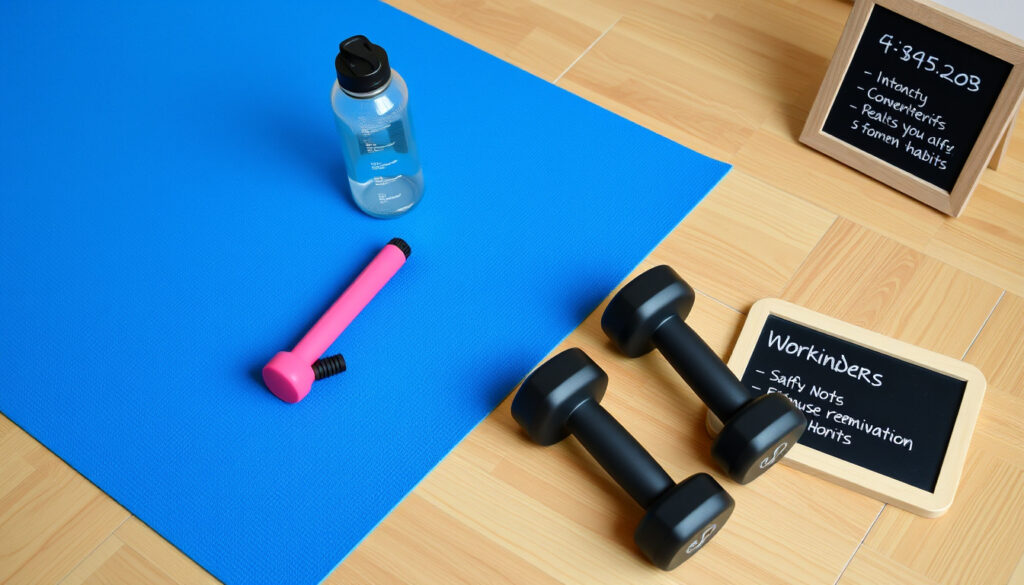
Best Workout Routines for Beginners: Schedule, Safety & Tips
Starting a workout routine can feel like staring at a blank calendar — you know you should, but where do you even begin? If you’re a beginner, the path to consistency is paved with small choices: which days to train, which moves to try, and how to keep your body safe along the way.
CDC recommended weekly exercise: 150 minutes moderate aerobic ·
Beginners who quit within 6 months: 50% ·
Ideal weekly frequency for beginners: 3–5 days ·
Common beginner workout duration: 30–45 minutes per session
Quick snapshot
- CDC recommends 150 minutes of moderate aerobic activity per week (CDC (U.S. public health agency))
- Bodyweight exercises are safe for beginners at home (Healthline (medical review publication))
- Exact calorie burn varies by individual weight and intensity (Healthline (medical review publication))
- Evidence for 3-3-3 rule is anecdotal, not research-backed (Healthline (medical review publication))
- 50% of new exercisers quit within 6 months (Healthline (medical review publication))
- Consistency in the first 8 weeks strongly predicts long-term adherence (Healthline (medical review publication))
- Progress by adding reps, sets, or resistance bands (The Fitness Wiki (community fitness resource))
- Gradually increase duration or intensity every 2–4 weeks (The Fitness Wiki (community fitness resource))
| CDC weekly exercise guideline | 150 minutes moderate aerobic |
| Quit rate for new exercisers | 50% within 6 months |
| Ideal frequency for beginners | 3–4 days per week |
| Percentage with high BP in US | 47% |
| Recommended rest between sets | 60–90 seconds |
| Beginner sets per exercise | 2–3 sets of 8–12 reps |
| Warm-up / cool-down duration | 5 minutes each |
What is the best workout schedule for beginners?
Building a sustainable schedule is the single most important step for a new exerciser. The right plan balances activity with recovery, fits your week, and leaves room to adapt.
Should I work out every day?
No — daily workouts are not recommended for beginners. The CDC recommends CDC (U.S. public health agency) at least 150 minutes of moderate aerobic activity per week, spread across most days. For strength training, a typical beginner schedule uses three non-consecutive days per week, such as Monday, Wednesday, and Friday, according to The Fitness Wiki (community fitness resource) and 10 Fitness (commercial fitness guidance). Rest days allow muscles to repair and reduce injury risk.
Is gymming 3 times a week enough?
Yes. Three weekly sessions are sufficient for beginners to build strength and improve cardiovascular health, provided each session includes a full-body approach. 10 Fitness (commercial fitness guidance) recommends starting with three full-body strength workouts per week, along with 20–30 minutes of low-impact cardio on two other days. A sample schedule: strength on Monday, lower-body on Thursday, upper-body on Friday, cardio on Tuesday and Saturday, rest on Wednesday and Sunday.
The implication: consistency over frequency matters more. Three well-planned sessions are far better than five inconsistent ones.
What is the 3-3-3 rule for workout?
The 3-3-3 rule is a simple framework that helps beginners avoid overcomplicating exercise. The most common interpretation: 3 workouts per week, 3 exercises per session, 3 sets per exercise. 10 Fitness (commercial fitness guidance) echoes the second and third numbers by recommending 2–3 sets of 8–12 reps per exercise using light weights.
The 3-3-3 rule isn’t a scientific prescription — its power is in reducing decision fatigue. For someone overwhelmed by gym equipment, having a simple, repeatable structure increases adherence.
Some fitness circles also interpret the rule differently: 3 minutes warm-up, 3 minutes cool-down, 3 times per week. Either way, the concept lowers the mental barrier to starting. Healthline (medical review publication) advises beginners to design a plan with attainable steps — the 3-3-3 rule delivers exactly that.
What exercises are safe for high blood pressure?
Nearly 47% of U.S. adults have high blood pressure, according to the CDC. Exercise is one of the safest and most effective ways to manage it — if done correctly.
Which exercises should be avoided with high BP?
Heavy weightlifting and high-intensity interval training (HIIT) can cause dangerous blood pressure spikes in people with uncontrolled hypertension. Mayo Clinic (leading medical research center) advises starting with aerobic activities such as walking, cycling, or swimming. Avoid heavy barbell exercises and breath-holding during exertion.
What is the silent killer of blood pressure?
The “silent killer” is hypertension itself — it often has no symptoms but damages arteries over time. Consistent aerobic exercise can lower systolic blood pressure by 5–7 mmHg, according to Healthline (medical review publication). Consult a doctor before starting any new routine if you have diagnosed hypertension.
For the 47% of U.S. adults with high BP, a beginner routine that skips heavy lifting and prioritizes moderate aerobic work can reduce cardiovascular risk without triggering dangerous spikes.
What burns 500 calories in 30 minutes?
Running at 6 mph, high-intensity interval training (HIIT), and rowing can each burn around 500 calories in 30 minutes for a 155-pound person. However, Healthline (medical review publication) stresses that most beginners cannot safely sustain such intensity. Variation based on body weight and effort is enormous — a 130-pound person may burn only 350 calories running the same pace.
The catch: chasing 500-calorie burns too early can lead to burnout or injury. Focus on consistency first. 10 Fitness (commercial fitness guidance) recommends 20–30 minutes of low-impact cardio 2–3 times per week for beginners, building up duration gradually.
What are the best beginner workout routines at home?
Home workouts remove commute time and gym intimidation. Bodyweight exercises — squats, push-ups, lunges, planks — require no equipment and are safe for beginners, per Healthline (medical review publication). A sample full-body circuit: 3 rounds of 10–12 squats, 8 push-ups (knee version if needed), 10 lunges per leg, and a 20-second plank.
Proper form matters more than any equipment. Nuffield Health (UK healthcare organization) advises beginners to go slow and focus on technique. Progression can come from adding reps, sets, or resistance bands — not from rushing the movement.
Gym vs. home workouts for beginners
A common fork in the road is deciding between a gym membership and working out at home. Each path has trade-offs, as shown in the comparison below.
| Aspect | Gym | Home |
|---|---|---|
| Equipment | Full range available (dumbbells, barbells, machines, cables) | Limited to bodyweight, bands, or purchased gear |
| Space | Dedicated, separate from daily life | Requires clear floor area, may feel cramped |
| Cost | $10–$50+ monthly fee | Minimal – often free after initial band/dumbbell purchase |
| Social interaction | Staff, trainers, other gym-goers for accountability | Solo – motivation depends entirely on self-discipline |
| Supervision | Access to certified trainers for form checks | Rely on videos, mirrors, or feedback from friends |
| Convenience | Travel time, fixed hours | Zero commute, 24/7 availability |
Upsides
- Gym equipment accelerates strength gains with progressive overload
- Professional guidance reduces injury risk for beginners
- Built-in community can boost consistency
Downsides
- Monthly fees add up, especially if you quit early
- Travel and waiting for equipment can drain motivation
- Home workouts may lack sufficient resistance for long-term progression
How to start your first workout routine in 5 steps
Follow these evidence-backed steps to build a routine that sticks.
- Consult your doctor – especially if you have high blood pressure or other chronic conditions. Mayo Clinic (leading medical research center) recommends a medical clearance before starting any exercise program for individuals with hypertension.
- Pick a schedule – choose 3 non-consecutive days per week for strength, and add 2 days of low-impact cardio. Write it on your calendar.
- Learn proper form – watch beginner tutorials for squats, push-ups, and hinges. Nuffield Health (UK healthcare organization) stresses technique over intensity in the first month.
- Start light – use bodyweight or the lightest dumbbell. 10 Fitness (commercial fitness guidance) recommends 2–3 sets of 8–12 reps with light weights.
- Track progress – log sets, reps, and how you feel. Increase weight by 2.5–5 lbs when you can complete 3 sets of 12 reps with good form, as suggested by The Fitness Wiki (community fitness resource).
Clarity check
Confirmed facts
- CDC’s 150-minute moderate exercise recommendation reduces chronic disease risk
- Benefits of aerobic exercise for reducing blood pressure are well-documented
- Bodyweight exercises are safe for beginners at home
What’s unclear
- Exact calorie burn varies by individual weight, metabolism, and intensity
- Optimal workout split for beginners may depend on personal goals (muscle vs. cardio)
- Evidence for 3-3-3 rule is anecdotal, not research-backed
“If you have high blood pressure, aerobic exercise is often the safest starting point — but always discuss your plan with your doctor before beginning any new fitness regimen.”
Dr. Edward R. Laskowski, Mayo Clinic (sports medicine specialist)
“Adults should aim for at least 150 minutes of moderate-intensity aerobic activity per week, and muscle-strengthening activities on two or more days per week for additional health benefits.”
CDC Physical Activity Guidelines (U.S. public health agency)
For the beginner with high blood pressure, the choice is clear: prioritize moderate aerobic activity three to four times a week, skip heavy lifting until you’ve built a base, and always warm up and cool down — or risk stalling your progress before it begins. Managing blood pressure through exercise can meaningfully improve life expectancy — read more in our guide on average life expectancy in the U.S..
For a detailed weekly schedule and safety tips, check out our guide on best workout routines for beginners.
Frequently asked questions
What is the best workout schedule for beginners?
Aim for 3 full-body strength sessions per week on non-consecutive days (e.g., Monday, Wednesday, Friday) plus 2 days of low-impact cardio. This aligns with the CDC’s 150-minute aerobic guideline and allows recovery.
What is the 3-3-3 rule for workout?
It’s a simple framework: 3 workouts per week, 3 exercises per session, 3 sets per exercise. It’s not backed by formal research but helps beginners build consistency and avoid overthinking.
What exercise is best for high blood pressure?
Moderate aerobic exercise like walking, cycling, or swimming is safest and most effective. Avoid heavy weightlifting and HIIT until your blood pressure is under control. Always consult a doctor first, as recommended by the Mayo Clinic.
What is the best exercise app for perimenopause?
Apps that offer low-impact strength and cardio, such as FitOn or Peloton, can be helpful. However, consult your healthcare provider for personalized recommendations during perimenopause. Note that some apps focus on specific health metrics; your blood type might also play a role in overall health planning — see our article on O Positive Blood Type facts and benefits.
Should I workout every day if I’m a beginner?
No. Daily workouts increase injury and burnout risk. Beginners should aim for 3–5 exercise days per week with rest or active recovery on the other days.
Is gymming 3 times a week enough?
Yes. Three well-structured full-body workouts per week, complemented by light cardio on off-days, are sufficient for building strength and endurance in the first few months.
What burns 500 calories in 30 minutes?
Running at 6 mph, HIIT, or rowing can burn roughly 500 calories in 30 minutes for a 155-pound person, but intensity varies. Beginners should focus on consistency, not immediate calorie targets.
More related posts
 Why Am I Dizzy – Causes, Types and When to Worry
 How to Set Up Google Alerts: Step-by-Step on All Devices
 The Summer Hikaru Died: Plot, LGBTQ+ Status & Season 2
 Are Grapes Bad for Dogs? Toxicity, Risks & Symptoms
 Microsoft Support Phone Number: Official 24/7 Customer Service
 Google Reviews by Me – Find, Edit and Delete Guide
 White Chicken Chili Recipe – Ingredients & Pro Tips
 When Did Jesus Die – Biblical and Historical Evidence