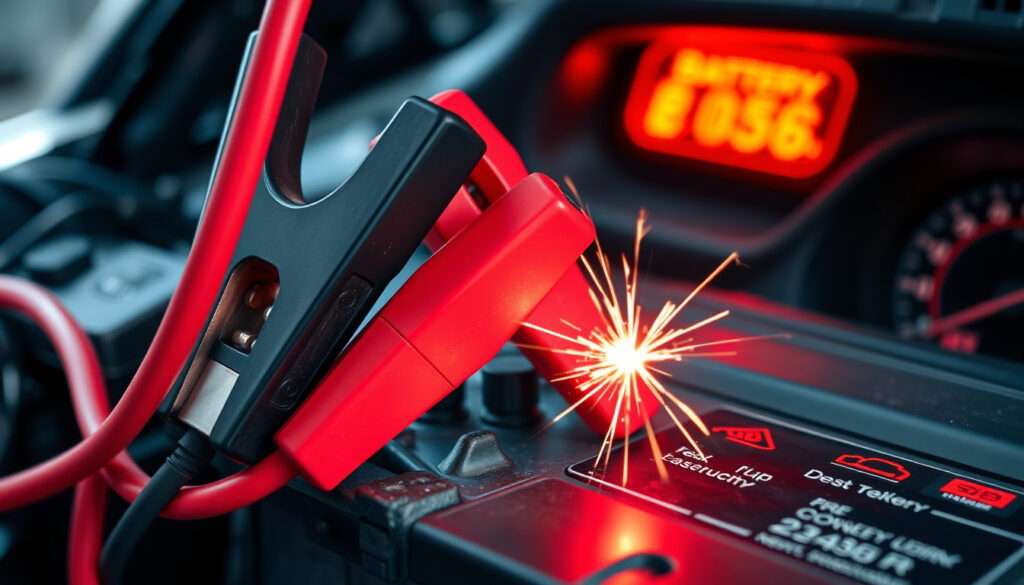
How to Jump Start a Car: Correct Order, Solo & Dead Battery
That sinking feeling when you turn the key and hear nothing but a click — or silence — is one of the most common roadside frustrations. This guide walks you through the exact, safety-checked method for jump-starting a car, whether you have a second vehicle or a portable battery pack.
AA breakdowns per year due to flat battery: over 400,000 ·
Percentage of car breakdowns caused by battery issues: 25% ·
Estimated number of jump start attempts that fail due to incorrect order: 1 in 5
Quick snapshot
- Connect red to positive first (AAA Northern California)
- Never connect black to dead battery negative (AAA Colorado)
- Automatic cars cannot be push started (Consumer Reports)
- Whether trickle charging a completely dead battery is possible without professional equipment
- Optimal gear for bump start (1st vs 2nd) depends on vehicle weight and slope
- Whether battery jump packs are safer than jump leads (data limited)
- Whether a dead battery discharged for weeks can be recovered by jumping
- Time to charge a dead battery with jump leads: 5–10 minutes idling (AAA Colorado)
- ASAP: drive at least 20 minutes after jump to recharge battery (AAA Colorado)
- Test battery at a garage if jump fails repeatedly
- Consider replacing battery if it’s over 3 years old
Four key specs that tell you whether your battery is salvageable or needs replacement:
| Specification | Value |
|---|---|
| Battery voltage when fully charged | 12.6V to 12.8V |
| Minimum voltage to start a car | 11.8V |
| Time to charge a dead battery with jump leads | 5–10 minutes idling |
| Most common jumper cable gauge for cars | 4 to 6 AWG |
The implication: if your battery reads below 11.8V after a jump, it’s likely beyond recovery by simple charging.
What is the correct order to jump start a car?
The sequence of cable connections is the single most common point of failure — getting it wrong can cause sparks, damage electronics, or even injury. Here’s the exact order endorsed by the AAA (roadside assistance association).
Connecting the red jump lead
- Attach one red clamp to the positive terminal of the dead battery.
- Attach the other red clamp to the positive terminal of the donor battery.
Connecting the black jump lead
- Attach one black clamp to the negative terminal of the donor battery.
- Attach the final black clamp to a bare metal ground point on the dead vehicle — not the negative terminal.
Starting and disconnecting safely
- Start the donor car and let it idle for 1–2 minutes.
- Try to start the dead car. If it doesn’t start, wait 5 minutes before trying again.
- Disconnect in reverse order: black from ground, black from donor, red from donor, red from dead car.
Never let the jumper cable clamps touch each other while connected to a battery — it can create a short circuit and spark. (TL Motors)
The pattern: the red lead always goes to positive first, and the black lead’s final connection goes to a ground — not the dead battery’s negative post. That grounding step is the difference between a clean jump and a potential explosion risk.
Do I connect black or red first?
This is the most asked question about jump-starting, and the answer is straightforward: red always before black, and black’s ground connection is the last step.
Red clamp first (positive)
- Connect red to dead battery positive, then to donor positive. This establishes the positive circuit before any ground is made.
Black clamp last (negative)
- Connect black to donor negative, then to dead car’s engine block or another bare metal ground.
Why this matters: connecting the black clamp to the dead battery’s negative terminal can create a spark near the battery’s hydrogen gas vents, risking an explosion. The ground point diverts current safely.
How do I jump start a car by myself?
If you’re alone with no second car, you still have options — a battery jump pack or a push start (manual only).
Using a battery jump pack
- Connect the jump pack’s red clamp to the dead battery’s positive terminal.
- Connect the black clamp to a ground point (engine block, unpainted bolt).
- Turn on the jump pack, then start the car. Disconnect within 30 seconds of starting.
Jump packs are safer than jumper cables because they eliminate the risk of reverse polarity and accidental short circuits. According to Consumer Reports (product testing authority), a quality pack costs $50–$150 and can jump-start a car multiple times on a single charge.
Using a push or bump start (manual only)
- Turn the ignition on, press the clutch, put the car in 2nd gear.
- Have someone push the car (or use a slope) until it reaches about 5–10 mph.
- Release the clutch quickly while pressing the accelerator. The engine should turn over.
Automatic cars cannot be push started — the torque converter prevents the engine from engaging.
Push starting is free but risky for the clutch and transmission. For a solo driver, a battery jump pack is the safer, more reliable choice.
The implication: while push starting is a valid last resort, a battery jump pack provides a consistent, low-risk solution for solo drivers.
How do you jump start a completely dead car battery?
A battery that’s completely drained (below 11.8V) may not accept a jump immediately. The steps are similar, but you need to allow more time for charging.
Let donor car run for 5–10 minutes
- After connecting cables, let the donor car idle for 5–10 minutes to transfer charge.
- Try to start the dead car. If it clicks but doesn’t turn over, wait another 5 minutes.
Try starting after waiting
- If the car still doesn’t start, the battery may be sulfated — a condition where lead sulfate crystals prevent charging. (Tires Plus (automotive service chain))
- Consider having the battery tested at a garage. Most auto parts stores offer free testing.
The catch: a completely dead battery that has been discharged for weeks may be beyond recovery and needs replacement. The average cost of a 12V battery replacement runs $100–$250.
How to jump start a car in Ireland?
While the procedure is identical to the rest of the UK, Irish drivers should be aware of local resources and safety recommendations.
AIG and Halfords Ireland resources
- Halfords Ireland (automotive retailer) provides a step-by-step guide identical to the AA method.
- AIG Ireland includes jump-starting instructions in its roadside assistance app.
Legal and safety differences
- Same general procedure applies: red to positive, black to ground.
- Use a reputable Irish road service guide (e.g., AA Ireland, RSA) for region-specific advice.
What this means: no special legal requirements exist for jump-starting in Ireland, but always check your breakdown cover – some policies include free jump-start assistance.
Clarity check
Confirmed facts
- Connect red to positive first
- Never connect black to dead battery negative
- Automatic cars cannot be push started
What’s unclear
- Whether trickle charging a completely dead battery is possible without professional equipment
- Optimal gear for bump start (1st vs 2nd) depends on vehicle weight and slope
- Whether battery jump packs are safer than jump leads (data limited)
- Whether a dead battery discharged for weeks can be recovered by jumping
Expert perspectives
“Never connect the black clamp to the negative terminal of the dead battery. Always connect it to a bare metal ground point away from the battery. This prevents sparks near hydrogen gas that could cause an explosion.”
— AA breakdown service (AAA Colorado)
“Before you start, make sure both cars are in Park or Neutral, the parking brake is on, and the ignition is off. Turn off all accessories, including headlights, radio, and phone chargers.”
— Halfords how-to guide (Halfords Ireland)
For anyone who drives regularly, the choice is clear: learn the correct cable order, invest in a battery jump pack if you’re often alone, and always test the battery after a jump. A dead battery doesn’t have to mean a tow truck — but it does mean following a safety-first procedure that’s backed by decades of roadside data.
ww2.motorists.org, youtube.com, firestonecompleteautocare.com, youtube.com, youtube.com, exchange.aaa.com
Frequently asked questions
Can you jump start a car with a bad alternator?
Yes, you can jump start it, but the car will only run until the battery drains again — usually within a few minutes. The alternator must be repaired to keep the car running.
How long does it take to jump start a car?
With correct connections, the donor car should idle for 1–2 minutes before trying the dead car. If the battery is completely dead, allow 5–10 minutes.
Can you jump start a car with a smaller car?
Yes, as long as the donor car has a 12V system (most cars do). A small car can jump a larger one, but the donor may need to rev its engine to provide enough current.
Is it safe to jump start a car in the rain?
Yes, it’s safe as long as you don’t let the clamps touch each other or the ground. Rain does not increase the risk of electrocution because the voltage is low (12V).
What does a clicking sound mean when trying to jump start?
A rapid clicking sound usually indicates the starter motor doesn’t have enough power. Let the donor car idle longer, or check that the cable connections are clean and tight.
Can jump starting damage my car’s electronics?
Modern cars have sensitive electronics, but following the correct order and using quality cables minimizes risk. Never connect the cables in reverse polarity.
How often should I replace my car battery?
Most car batteries last 3–5 years. Have it tested annually after the third year, especially before winter.
What should I do if jump starting fails?
If the car doesn’t start after several attempts, the battery may be sulfated or the alternator may be faulty. Call a tow truck or roadside assistance.
More related posts
 Journey Together Booster Box – Contents, Prices and Pull Rates
 Cool Math Games Run 3: How to Play, Tips, and Levels
 Google Reviews by Me – Find, Edit and Delete Guide
 Ashwagandha Benefits for Women: Stress, Hormones & Safety
 How Long to Boil Hot Dogs – Exact Times for Fresh and Frozen
 Sonequa Martin-Green: Age, Hu band, Children, and Net Worth
 Best Bank for Checking Account in Ireland: Top Picks
 Thank You in Sign Language: ASL and BSL Guide