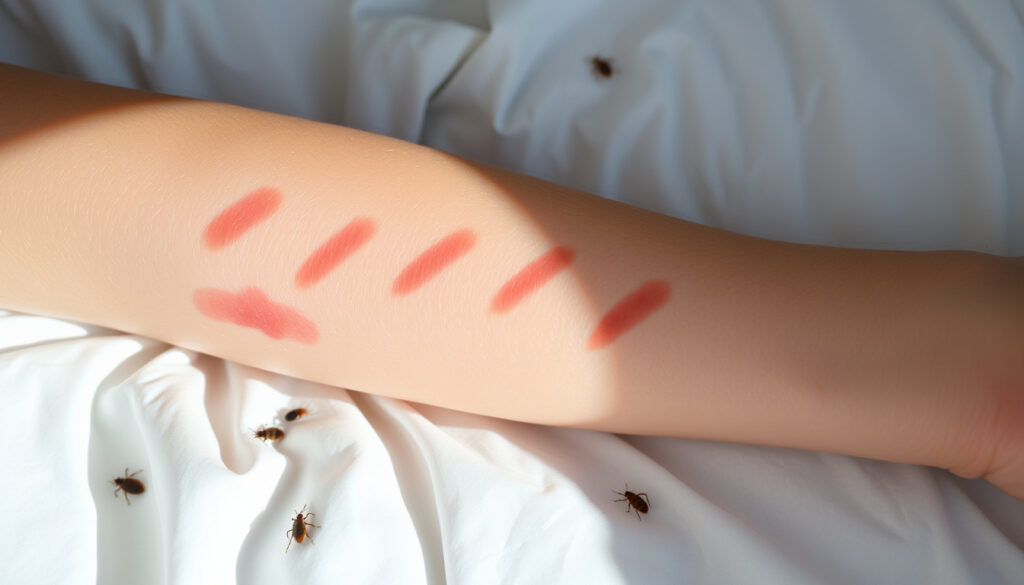
What Do Bed Bug Bite Look Like? Symptom and Relief
It’s a question almost everyone asks at some point: what do bed bug bites look like? The answer isn’t always obvious because reactions vary so much from person to person. This guide combines clinical dermatology data from the American Academy of Dermatology with real-world observations to help you tell bed bug bites apart from mosquito bites, flea bites, and other skin conditions — and know exactly what to do next.
People who react to bed bug bites: 70% develop raised welts ·
Typical bite pattern: Clusters or lines of 3–5 bites ·
Bite size: 1–5 mm in diameter ·
Time to react: Hours to several days ·
Number of bites per feeding: 10 or more spots
Quick snapshot
- Red or discolored bumps
- Clusters or lines
- Size 1–5 mm
- Intense itching
- Swelling or welts
- May appear days after bite
- Wash with soap and water
- Corticosteroid cream
- Antihistamine for itch
- Blood stains on sheets
- Dark fecal spots
- Musty odor
Five key facts, one pattern: the appearance and timing of bed bug bites can vary widely, but the location and arrangement offer reliable clues.
| Attribute | Value |
|---|---|
| Reaction rate | 70% of people develop visible welts |
| Bite pattern | Often in clusters or a line (breakfast, lunch, dinner) |
| Feeding frequency | Every 3–7 days |
| Active time | Nighttime, host asleep |
| Preferred areas | Face, neck, arms, legs |
What Do Bed Bug Bites Look Like and How Should You Treat Them?
What do bed bug bites look like?
- Bites appear as red or discolored bumps, often in clusters or lines on exposed skin. The American Academy of Dermatology (clinical guidance) notes they may be raised welts that itch intensely.
- On darker skin tones, bites may look brown, purple, violet, or darken compared to surrounding skin, says NHS (national health authority).
- Reactions range from no visible marks to raised, itchy welts. About 70% of people develop a noticeable reaction, per AAD.
- Bites often appear in clusters, lines, or zigzags — sometimes called “breakfast, lunch, dinner” pattern, reports Harvard Health Publishing (university medical publisher).
Do bed bug bites itch?
- Yes — intense itching is the most common symptom. According to Medical News Today (health media), bites may also cause a burning or painful sensation.
- Some people have no visible reaction at all, notes PestWorld (pest control industry association).
What do bed bug bites feel like?
- Most people describe a mild burning or prickling at the moment of the bite, followed by increasing itchiness that can peak hours or days later. The bite itself is usually painless, explains Orkin (pest control expert).
How to treat bed bug bites at home
- Wash the bites gently with soap and water to reduce the risk of infection (recommended by AAD).
- Apply a cool, damp cloth to soothe itching and swelling, per NHS.
- Use an over-the-counter corticosteroid cream or antihistamine to control itch (AAD).
- Avoid scratching to prevent secondary bacterial infection. If signs of infection appear — increased redness, warmth, or pus — consult a doctor, who may prescribe antibiotics (Medical News Today).
Delayed reactions mean you may not connect the bites to their true source until days later. That lag can allow an infestation to grow before you take action. The pattern and location are your best early clues.
What could be mistaken for bed bug bites?
Bed bug bites vs mosquito bites
- Mosquito bites are usually larger, more swollen, and appear quickly after a bite. Bed bug bites tend to cluster in lines or zigzags, while mosquito bites are isolated and random, according to Harvard Health Publishing.
Bed bug bites vs flea bites
- Flea bites are smaller, often clustered around ankles and legs, and may have a red halo. Bed bug bites appear on any exposed skin above the mattress line, not just the lower legs. Prevention (health media) notes that flea bites are common around the feet and ankles, whereas bed bugs target the face, neck, arms, and hands.
Other skin conditions that mimic bed bug bites
- Allergic reactions, hives, scabies, and poison ivy rashes can be mistaken for bed bug bites. The key differentiator: bed bug bites follow a linear or clustered pattern on areas of skin that were exposed while sleeping, as Harvard Health Publishing explains.
- Pattern and location help differentiate: bed bug bites are often in a line or zigzag on exposed skin. If you wake up with a row of three to five bites on your forearm or neck, bed bugs are the likely culprit.
Misdiagnosis can waste weeks. Treating hives or scabies instead of bed bugs won’t stop the source — and the infestation will keep growing while you treat the wrong thing.
What are the first signs of bedbugs?
What are three signs you might have bed bugs?
- Bites on skin that appear overnight in clusters or lines.
- Small blood stains on sheets or pillowcases from crushed bugs.
- Dark spots (fecal matter) on mattresses, box springs, or headboards — these look like rust-colored or black specks, reports Orkin.
How to find bed bugs
- Look for live bugs in mattress seams, headboards, and furniture crevices. Use a flashlight and a credit card to inspect cracks and crevices, advises PestWorld.
- A musty odor may be present in heavy infestations, similar to the smell of damp towels or rotten raspberries.
What part of the body do bed bugs bite the most?
Why bed bugs bite exposed skin
- Bed bugs are attracted to carbon dioxide and body heat. They feed at night while the host is asleep, typically every 3–7 days. Bites occur on skin not covered by bedding or clothing — usually the face, neck, arms, hands, and legs, according to Prevention.
Common bite locations
- Face, neck, arms, hands, and legs are most common. If you sleep in short sleeves or without a shirt, your shoulders and upper back may also be affected. The American Academy of Dermatology notes that bites often appear in a line along the edge of bedding where skin was exposed.
What kills bedbugs immediately?
Heat treatment for bed bugs
- High heat (120°F/49°C) kills bed bugs instantly. Steam cleaning and running laundry on high heat are effective methods. The EPA (Environmental Protection Agency) confirms that heat above 120°F kills all life stages (see EPA bed bug guidelines).
Chemical treatments that work quickly
- EPA-registered insecticides containing pyrethroids or neonicotinoids may kill on contact, though some bed bug populations have developed resistance. Rotating treatments or using a combination approach is often necessary.
Professional vs DIY methods
- Vacuuming can remove bugs and eggs but does not kill eggs — dispose of the vacuum bag immediately. Professional extermination is often necessary for severe infestations. Bites alone do not require immediate pest control; identify the source first, recommends the EPA.
Heat and chemicals can kill visible bugs, but eggs are harder to eradicate. A single missed egg means a new generation in two weeks. That’s why professional treatment often requires follow-up visits.
The implication: quick fixes may buy time, but only thorough, repeated treatment eliminates the infestation entirely.
Confirmed facts vs. what remains unclear
Confirmed facts
What’s unclear
- Why some people have no reaction to bites.
- How long after a bite symptoms appear (range: hours to 10 days).
- Whether bed bugs transmit diseases to humans (current evidence suggests very low risk).
Expert perspectives
“Bed bug bites often appear as itchy, raised welts that may be red or swollen, and can occur in lines, zigzags, clusters, or groups of three to five.”
— American Academy of Dermatology (clinical guidance)
“On black or brown skin they may look purple and may be harder to see.”
— NHS (national health service)
“High heat (120°F/49°C) kills bed bugs instantly; steam cleaning and laundry on high heat are effective methods.” For more information on bed bug bites and how to find relief, you can explore the Persistence of Memory melting clocks meaning.
— Environmental Protection Agency (bed bug guidelines)
For anyone waking up with mysterious itchy spots, the critical first step is correct identification. The pattern — clusters or lines on exposed skin — is your best clue. Once you confirm bed bugs, the choice is clear: treat the bites at home with basic first aid and tackle the infestation with heat or professional help. Delaying action allows the problem to escalate, turning a manageable nuisance into a costly extermination project.
Frequently asked questions
Can bed bug bites spread diseases?
Current research indicates bed bugs are not known to transmit infectious diseases to humans. However, scratching can lead to secondary bacterial infections.
How long do bed bug bites take to heal?
Most bites clear up on their own within about a week, according to the NHS. Healing time depends on individual reaction and scratching.
Should you pop a bed bug bite?
No. Popping increases the risk of infection and can worsen itching. Keep the area clean and use a corticosteroid cream instead.
Do bed bugs bite every night?
They typically feed every 3–7 days. If the infestation is large, you may be bitten more frequently.
Can you have bed bugs without seeing bites?
Yes. About 30% of people show no visible reaction to bites, so you may have bed bugs without noticing bites.
What should you do if you find a bed bug on your skin?
Gently remove it and place it in a sealed bag or container for identification. Wash the area with soap and water. Do not crush it.
Are bed bugs visible to the naked eye?
Yes. Adult bed bugs are about the size of an apple seed — 4–5 mm long — and visible without magnification.
Related reading
- What Does Strep Throat Look Like? — A visual identification guide for another common health concern.
- Toxic Shock Syndrome Symptoms — Learn to recognize early signs of a serious infection, relevant for readers concerned about skin reactions.
More related posts
 White Chicken Chili Recipe – Ingredients & Pro Tips
 The Mummy 1999 Cast: Fraser, Weisz, Full List & Roles
 Discover Home Loans Login: Access Your Account & Check Balance
 Hayley Atwell Movies and TV Shows – Full List and Highlights
 Mikki Mase Net Worth 2026: $32M Claim vs Reality
 Donald Trump News Today: Iran Ceasefire Extended Indefinitely
 How to Set Up Google Alerts: Step-by-Step on All Devices
 Star Trek: Strange New Worlds Season 3 Release, Renewal & Ending