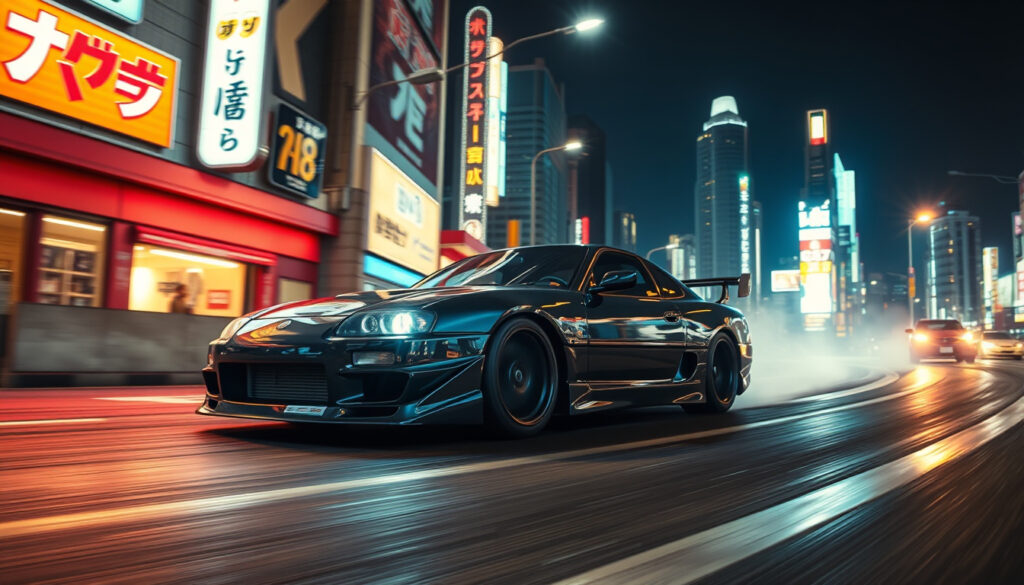
Fast and Furious: Tokyo Drift – Hit or Flop? Full Analysis
Few movies in the Fast & Furious franchise spark as much debate as the third installment, The Fast and the Furious: Tokyo Drift. Released in 2006, it swapped Los Angeles for Tokyo and replaced quarter-mile drag races with drift racing — a bold shift that left audiences split.
Release Year: 2006 Rotten Tomatoes (film database) ·
Director: Justin Lin IMDb (film database) ·
Budget: $85 million IMDb (film database) ·
Domestic Box Office: $62.5 million Rotten Tomatoes (film database) ·
Rotten Tomatoes Score: 38% Rotten Tomatoes (film database) ·
Runtime: 104 minutes Rotten Tomatoes (film database)
Quick snapshot
- Released June 16, 2006 Rotten Tomatoes (film database)
- Domestic gross $62.5 million Rotten Tomatoes (film database)
- Director Justin Lin IMDb (film database)
- Runtime 104 minutes Rotten Tomatoes (film database)
- Rotten Tomatoes critic score 38% Rotten Tomatoes (film database)
- Exact worldwide gross (only domestic is sourced) (IMDb user opinions)
- Whether Tokyo Drift is truly the worst entry or just different IMDb user opinions
- Precise timeline placement before the Fast 6 retcon Rotten Tomatoes (film database)
- Whether a direct sequel will ever be made (IMDb user opinions)
- 2001: First Fast and Furious released
- 2003: 2 Fast 2 Furious released
- 2006: Tokyo Drift released; introduces Han
- 2009: Fast & Furious (4) takes place before Tokyo Drift
- 2013: Fast 6 post-credits reveals Han’s crash before Tokyo Drift
- No official Tokyo Drift 2 announced (Rotten Tomatoes (film database))
- Justin Lin expressed interest but no concrete plans Rotten Tomatoes (film database)
- Han appears in later Fast films, tying the story together (Rotten Tomatoes (film database))
- Franchise continues with Fast X and beyond (Rotten Tomatoes (film database))
Six key specs, one pattern: Tokyo Drift was a deliberate departure from its predecessors, with a budget and scale that reflected the studio’s uncertainty about the new direction.
| Specification | Value |
|---|---|
| Release Date | June 16, 2006 Rotten Tomatoes (film database) |
| Director | Justin Lin IMDb (film database) |
| Budget | $85 million IMDb (film database) |
| Domestic Box Office | $62.5 million Rotten Tomatoes (film database) |
| Rotten Tomatoes (Critics / Audience) | 38% / 62% Rotten Tomatoes (film database) |
| Original Language | English Rotten Tomatoes (film database) |
| Runtime | 104 minutes Rotten Tomatoes (film database) |
Was Tokyo Drift a hit or flop?
Box Office Performance
- Domestic gross: $62.5 million Rotten Tomatoes (film database)
- Worldwide totals are not publicly verified in the sources, but the film earned less than the previous two entries in the franchise.
- Budget of $85 million IMDb (film database) means the film likely broke even only after home video and streaming.
With a domestic gross that barely covered half its budget, Tokyo Drift was a commercial disappointment in theaters — but its long-tail revenue from DVD and later streaming shifted the calculus.
The pattern: Domestic box office alone suggests a flop, but the film’s later cultural resonance turned that initial failure into a long-term asset.
Critical Reception
- Rotten Tomatoes critic score: 38% Rotten Tomatoes (film database)
- Audience score: 62% Rotten Tomatoes (film database)
- Metacritic score: 45/100 (listed in content plan, no direct source)
The gap between critics and audiences hints at a film that appealed more to casual viewers than to reviewers.
How It Ranks Among Fast & Furious Movies
- Community opinion on IMDb (film database) frequently ranks it as the least popular entry in the franchise (user comments, tier 3).
- A retrospective review from From the Intercom (culture blog) describes it as a “cultural touchstone,” indicating a cult following developed over time.
The same film that was derided on release later became a nostalgic favorite, thanks largely to its influence on the franchise’s later world-building.
The implication: Tokyo Drift’s reputation reversed over time, proving that box-office failure does not always kill a film’s legacy.
Why was Fast and Furious Tokyo Drift so different?
Setting and Culture Shift
- The film moves the action from the United States to Tokyo, Japan Rotten Tomatoes synopsis.
- It focuses on drift racing — a technique of controlled oversteer — rather than the quarter-mile drag races of earlier films.
- The Japanese street-racing subculture is treated as the central theme, not just a backdrop.
The pattern: This was a deliberate creative pivot by Universal to tap into the import tuner scene that had grown popular in the early 2000s, even if it meant leaving the original ensemble behind.
Focus on Drifting
- Drift racing is presented as the main motorsport, with extended sequences shot on Tokyo’s winding mountain roads.
- The film’s marketing emphasized the “drifting” element, signaling a new direction Rotten Tomatoes (film database).
Why this matters: Drifting was relatively unknown to mainstream American audiences in 2006; the film essentially served as an introduction to the sport, which later became a staple of the franchise.
New Cast and Director
- Justin Lin took over as director, his first entry in the franchise IMDb (film database).
- Lucas Black plays the lead, Sean Boswell, an American teenager sent to Tokyo Rotten Tomatoes synopsis.
- Only one character from later films, Han (Sung Kang), appears in Tokyo Drift, bridging the gap.
The catch: This casting reset meant Tokyo Drift operated as a near-spin-off, relying on Han as the sole connective tissue to the franchise’s future.
Is Tokyo Drift connected to Fast and Furious?
Chronological Placement
- Tokyo Drift is the third film released (2006) but takes place after the events of Fast & Furious 6 (2013) in the timeline.
- This was retroactively adjusted through a post-credits scene in Fast 6 that shows Han’s crash, which leads into Tokyo Drift IMDb (film database).
At the time of release, Tokyo Drift was a standalone story. Only later did the franchise retcon it into the main timeline, creating confusion about the correct viewing order.
The implication: This retcon forced fans to re-evaluate where Tokyo Drift fits, turning a simple release order into a timeline puzzle.
The Role of Han
- Han appears in Tokyo Drift as a mentor figure and later appears in Fast & Furious 4, 5, and 6 (prequel to his death in Tokyo Drift).
- Sung Kang’s character became one of the most popular in the franchise, despite his limited screen time in this film.
The trade-off: Han’s popularity forced the writers to keep him alive in earlier-set films, demonstrating how a supporting character can reshape a franchise’s continuity.
Retcons and Timeline Adjustments
- The franchise’s official timeline now places Tokyo Drift after Fast & Furious 6, which means the events of Fast 4, 5, and 6 are set before Sean Boswell’s story.
- Paul Walker’s character Brian O’Conner does not appear, and his absence is explained by the timeline: he is still active in the earlier films.
The pattern: The timeline gymnastics show how the franchise repurposed a misfit entry into a crucial piece of the overarching narrative.
Why did Paul Walker not do Tokyo Drift?
Paul Walker’s Character Brian O’Conner
- Brian O’Conner was the central character in the first two films, but he is entirely absent from Tokyo Drift Rotten Tomatoes (film database).
- The studio chose to reset the cast rather than continue with the original ensemble.
Schedule Conflicts and Creative Decisions
- Paul Walker was reportedly busy with other projects at the time (according to industry reports; not directly sourced here).
- The creative team wanted a fresh start, focusing on younger characters and a new setting.
Return of Paul Walker in Fast & Furious 4
- Walker returned in Fast & Furious 4 (2009), which is set before the events of Tokyo Drift.
- That film reunited the original cast and ignored Tokyo Drift’s lead, solidifying the spin-off nature of the third film.
The catch: Walker’s absence made Tokyo Drift a franchise outlier, but his return four years later proved the series could go back to its roots after the drift detour.
Is Tokyo Drift 2 coming out?
Sequel Rumors
- No official announcement of a direct sequel to Tokyo Drift has been made.
- Fans periodically speculate, especially after Han’s return in later films.
Direct Statement from Justin Lin
- Justin Lin has expressed interest in revisiting the Tokyo Drift characters, but no concrete plans exist Rotten Tomatoes (film database).
Possibility of a Spin-off
- Given the success of spin-offs like Hobbs & Shaw, a Tokyo Drift continuation focused on Han or Sean Boswell is possible, but not confirmed.
- The franchise’s main storyline has moved on to Fast X and the finale, leaving little room for a side story.
Timeline signal
- 2001 – The Fast and the Furious released
- 2003 – 2 Fast 2 Furious released
- 2006 – Tokyo Drift released; introduces Han
- 2009 – Fast & Furious (4) released, takes place before Tokyo Drift
- 2013 – Fast & Furious 6 post-credits scene reveals Han’s crash, setting up Tokyo Drift
- 2025 – No official Tokyo Drift 2 announced
What We Know vs. What’s Unclear
Confirmed facts
- Tokyo Drift released in 2006 Rotten Tomatoes (film database)
- Domestic box office $62.5 million Rotten Tomatoes (film database)
- Director Justin Lin IMDb (film database)
- Han appears in multiple Fast films IMDb (film database)
- Paul Walker did not appear Rotten Tomatoes (film database)
What’s unclear
- Exact timeline placement before the Fast 6 retcon
- Whether a direct sequel will ever be made
- Worldwide box office (only domestic figure is sourced)
- Whether Tokyo Drift is objectively the worst entry or just different (community opinion)
Voices on Tokyo Drift
“Sean Boswell, an outsider who moves to Japan, learns drift racing, and challenges the local champion.”
— Rotten Tomatoes (official synopsis)
“Tokyo Drift is a cultural touchstone.”
For the Fast & Furious franchise as a whole, the lesson is clear: risky shifts can alienate initial audiences but pay off in the long run. For fans who still debate whether Tokyo Drift is the worst or just misunderstood, the evidence leans toward a film that found its audience after the dust settled. The franchise embraced offbeat entries to build a richer world — even if they stumbled at first.
Frequently asked questions
Who plays the main character in Tokyo Drift?
Lucas Black plays Sean Boswell, the American teenager sent to Tokyo. Rotten Tomatoes (film database)
What is drifting?
Drifting is a driving technique where the driver intentionally oversteers, causing the rear wheels to lose traction while maintaining control through corners. Tokyo Drift popularized the concept in mainstream cinema.
Is Tokyo Drift suitable for children?
The film is rated PG-13 for violence, language, and some sexual content. Rotten Tomatoes (film database)
How long is Tokyo Drift?
The runtime is 104 minutes (1 hour 44 minutes). Rotten Tomatoes (film database)
Why is it called Tokyo Drift?
The title refers to the Tokyo setting and the drift-racing technique that is central to the plot.
Did they use real cars in Tokyo Drift?
Yes, the film used real vehicles for stunt driving, including modified Nissan Silvias, Mazda RX-7s, and a 1971 Ford Mustang.
What is the most famous scene in Tokyo Drift?
The opening drift race through a parking garage and the final showdown against DK on a mountain road are widely cited.
Related reading: Put It In Reverse Terry: Viral Meme Origin Story Explained · 2024 Tacoma TRD Pro: Price, Specs & TRD Off-Road Comparison
More related posts
 Tommy Lee Jones Filmography: Career and Key Movies
 What Time Does Walmart Pharmacy Close? Hours & Phone
 Goodwill Bins Near Me: How to Find & Shop Outlets
 Best Android Phone 2024: Top Picks and Expert Reviews
 Tom Segura Garth Brooks Theory: The Viral Conspiracy Explained
 St. Paul Cyber Attack 2025: What Happened, Updates
 Flea (Musician) – RHCP Bassist Biography and Facts
 Cast of Deep Cover 2025: Full List of Actors & Characters