How to Lower Triglycerides: Fast Diet & Lifestyle Changes
If you’ve ever glanced at your blood test results and wondered what the triglyceride number means, you’re not alone. It’s a measure of fat in your blood that often gets overshadowed by cholesterol, but it matters just as much for heart health. The good news is that with a few targeted changes to your diet and daily habits, you can see meaningful drops in just a few weeks.
Normal triglyceride level (fasting): Less than 150 mg/dL (1.7 mmol/L) ·
Borderline high: 150–199 mg/dL (1.8–2.2 mmol/L) ·
High: 200–499 mg/dL (2.3–5.6 mmol/L) ·
Very high: 500 mg/dL (5.7 mmol/L) or above ·
Reduction with 5% weight loss: Approximately 20% decrease ·
Reduction with 30 min daily exercise: Up to 20–30% decrease
Quick snapshot
- Cutting added sugar and refined carbs lowers triglycerides by 20–30% within weeks (CardioSmart (American College of Cardiology patient resource))
- Exercise reduces triglyceride levels by up to 30% (CardioSmart (American College of Cardiology patient resource)) (CardioSmart (American College of Cardiology patient resource))
- Weight loss directly correlates with triglyceride decrease (Circulation (American Heart Association journal))
- Which supplement — berberine, fish oil, niacin — is most effective in the short term.
- Whether a single cheat meal significantly reverses progress.
- Triglyceride levels can drop noticeably within 2–4 weeks of cutting added sugars and increasing exercise (CardioSmart (American College of Cardiology patient resource))
- If lifestyle changes aren’t enough, medication (fibrates, statins, prescription fish oil) may be needed for very high levels (CardioSmart (American College of Cardiology patient resource))
Four ranges, one warning: triglycerides above 500 mg/dL carry a risk of pancreatitis.
| Category | Value |
|---|---|
| Normal Level | Less than 150 mg/dL |
| Very High Level | 500 mg/dL or higher (risk of pancreatitis) |
| Fastest Lowering Method | Eliminating added sugar and refined carbs |
| Key Lifestyle Target | 150 minutes of exercise per week |
The implication: even a small shift in your daily routine can move you from “very high” into a safer range.
What lowers triglycerides fastest?
Cutting added sugars and refined carbs
- Reducing added sugar intake can lower triglycerides by 20–30% within weeks, according to CardioSmart (American College of Cardiology patient resource).
- Diets high in fructose (from soda, candy, fruit juice) directly increase triglyceride production. The Cambridge University Hospitals NHS Foundation Trust (UK hospital trust) advises limiting added sugars and sugar-sweetened beverages.
Replacing sugary drinks with water
- Swapping even one sugary drink per day for water can cut daily added sugar by 20–40 grams. CardioSmart recommends eating whole fresh fruits rather than fruit juices.
- This single swap is often cited as the fastest dietary change with measurable results within two weeks.
For someone with a fasting level of 250 mg/dL, cutting sugary drinks alone could bring them to borderline high within a month — no pills, no complicated meal plans.
The catch: the effect is dose-dependent. The more added sugar you cut, the larger the drop.
What are the warning signs of high triglycerides?
Emergency signs: acute pancreatitis
- Very high triglycerides (≥500 mg/dL) can trigger acute pancreatitis, a life-threatening inflammation of the pancreas. CardioSmart notes that people with levels above 500 mg/dL may need a lower-fat diet and medical intervention.
Common hidden signs: fatigue, fatty deposits
- Most people with high triglycerides have no symptoms until levels are dangerously high. Some may notice small fatty deposits under the skin (xanthomas) or fatigue, but these are not reliable indicators.
The pattern: high triglycerides are a silent condition. The only way to know is a blood test after a 9–12 hour fast.
What’s the worst food for triglycerides?
Sugary drinks and sweets
- Sugary beverages are the worst because of their high fructose content. CardioSmart explicitly advises limiting sugar-sweetened beverages and desserts.
- Cambridge University Hospitals NHS Foundation Trust recommends keeping total fat below 30% of daily calories, but added sugar is the primary driver.
Refined carbohydrates (white bread, pasta, rice)
- Refined carbs spike insulin, which increases triglyceride production. Swapping them for whole grains can reduce levels.
A single 12-ounce soda contains about 40 grams of added sugar — enough to raise triglyceride levels for several hours. Replacing that with water or unsweetened tea eliminates the spike.
What this means: the worst offenders are not fats, but carbohydrates that quickly turn into sugar.
What is the best drink to lower triglycerides?
Water as the primary replacement
- Plain water replaces sugary drinks without adding calories or sugar. Cambridge University Hospitals NHS Foundation Trust guidance includes avoiding sugary drinks and choosing water as the main beverage.
Green tea as a supportive drink
- Green tea contains antioxidants (catechins) that may offer a modest additional benefit. While not a substitute for water, replacing one sugary drink with unsweetened green tea can help.
The pattern: the best drink is the one that displaces sugar. Water is free, available, and effective.
How to lower triglycerides naturally through lifestyle changes?
Daily exercise routine
- Aim for at least 150 minutes of moderate-intensity activity per week, such as brisk walking, cycling, or swimming. Cambridge University Hospitals NHS Foundation Trust recommends this dose plus muscle-strengthening exercises twice a week.
- CardioSmart reports that exercise can reduce triglycerides by up to 30%.
Weight loss goals
- A 5% reduction in body weight can lower triglycerides by approximately 20%, according to the Circulation review (American Heart Association journal), which states that the magnitude of decrease is directly related to the amount of weight loss.
Dietary fiber and healthy fats
- The National Lipid Association (lipid specialist society) recommends diet optimization including increased fiber and unsaturated fats from olive oil, nuts, and fish.
- Oily fish two to three times per week is recommended by Cambridge University Hospitals NHS Foundation Trust.
The implication: combining these three levers — exercise, weight loss, and dietary swaps — can reduce triglycerides by 50% or more in three to six months.
How to lower triglycerides: a step-by-step plan
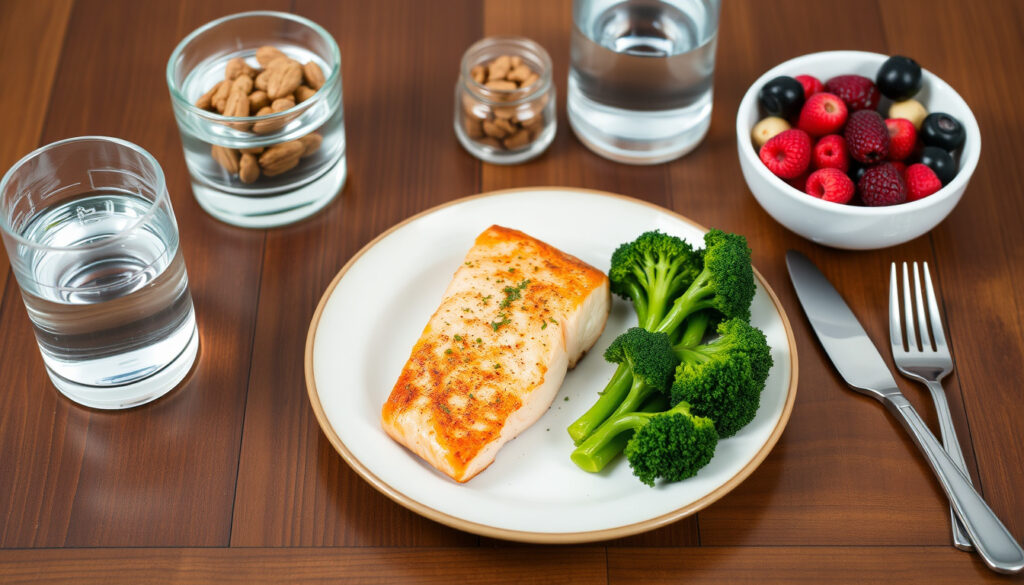
- Replace all sugary drinks with water or unsweetened tea. This is the single fastest change.
- Switch refined grains to whole grains. Choose brown rice, oats, whole-wheat bread, and quinoa.
- Eat fatty fish at least twice a week. Salmon, mackerel, sardines, and trout are rich in omega-3s.
- Exercise for 30 minutes daily. Brisk walking, cycling, or swimming counts.
- Lose 5–10% of body weight if overweight. Even a small reduction lowers levels.
- Limit alcohol. The National Lipid Association includes alcohol avoidance as a key lifestyle modification.
The trade-off: these steps require consistency, but they work without prescription medications for most people with moderate elevation.
Confirmed facts vs. what remains unclear
Confirmed facts
- Cutting added sugar and refined carbs lowers triglycerides (CardioSmart).
- Regular exercise reduces triglycerides (CardioSmart).
- Weight loss directly lowers triglycerides (Circulation).
What remains unclear
- Which specific supplement (berberine vs. fish oil vs. niacin) is most effective in the short term.
- Whether a single cheat meal significantly reverses progress.
- The exact timeline for triglyceride reduction after starting exercise in people with very high levels.
The takeaway: the big levers are well-established. The finer points of supplementation and daily variability still need more research.
Expert perspectives
“The first line of treatment for high triglycerides is always lifestyle modification — diet, exercise, and weight loss.”
— CardioSmart (American College of Cardiology patient resource)
“Aerobic endurance exercise should be the preferred recommendation for triglyceride reduction.”
— National Lipid Association (lipid specialist society)
“The magnitude of triglyceride decrease is directly related to the amount of weight loss.”
— Circulation (American Heart Association journal)
For anyone with a triglyceride level above 200 mg/dL, the choice is clear: start with water instead of soda, take a 30-minute walk each day, and lose a few pounds. Or keep the same habits and risk a number that keeps climbing. The science is consistent — and the decision is yours.
nourish.com, pmc.ncbi.nlm.nih.gov, webmd.com, onepeloton.com, monmouthcardiology.com, heart.org, account.allinahealth.org, newsroom.heart.org
Frequently asked questions
Can I drink alcohol if I have high triglycerides?
Alcohol can raise triglyceride levels, especially in people with high baseline levels. The National Lipid Association recommends limiting or avoiding alcohol as part of lifestyle modification.
Does intermittent fasting help lower triglycerides?
Some studies suggest that intermittent fasting can reduce triglycerides, but the evidence is not as strong as for consistent daily calorie restriction. The primary driver is an overall calorie deficit.
How long does it take to lower triglycerides with diet?
With strict dietary changes — cutting added sugar and refined carbs — you can see a noticeable drop within 2 to 4 weeks, according to CardioSmart.
Are all fats bad for triglycerides?
No. Unsaturated fats from olive oil, nuts, avocados, and fatty fish can help lower triglycerides. The issue is excess saturated fat and trans fat.
Is it safe to exercise with very high triglycerides?
Yes, but if you have levels above 500 mg/dL, check with your doctor first. Cambridge University Hospitals NHS Foundation Trust recommends 150 minutes of moderate activity per week for most people.
Can stress cause high triglycerides?
Chronic stress may contribute to higher triglycerides indirectly through poor diet, increased alcohol consumption, and hormonal changes. Managing stress is a supportive but not primary treatment.
Related reading: Ashwagandha Benefits for Women: Stress, Hormones & Safety · Best Workout Routines for Beginners: Schedule, Safety & Tips
More related posts
 Tiger Global AUM 2026 Long Short: Performance & Holdings
 3 Ingredient Peanut Butter Cookies: Fast Recipe & Fixes
 Buffalo Bills vs Denver Broncos Stats: 2026 Game, Head-to-Head
 Tsunami Warning Today Live – Current Status & Alerts
 Xfinity Customer Service Phone Number: How to Get a Human
 80 cm to Inches – Quick Conversion Guide & Common Uses
 Honkai: Star Rail Characters – Main, Popular, 5-Star Count
 NFL Free Agents 2025: Top Rankings & Positions