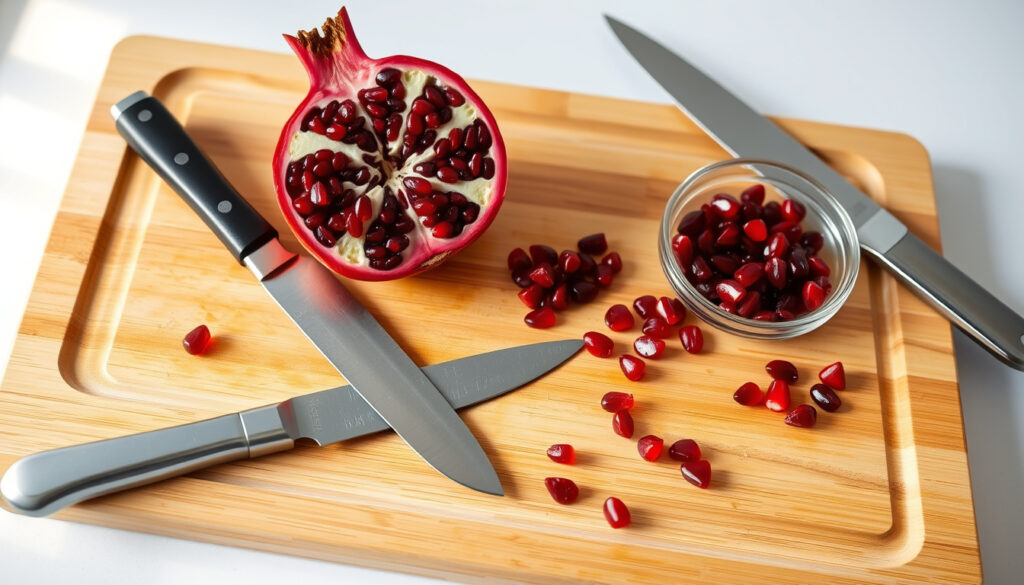
How to Cut a Pomegranate: No-Mess Methods That Work
If you’ve ever tackled a pomegranate the wrong way, you know the aftermath: stained fingers, sticky countertops, and a surprising amount of juice flying where it shouldn’t. But there are smarter methods—some backed by seasoned cooks—that keep the mess contained and deliver a bowl of jewel-like arils in minutes. Here’s how to cut a pomegranate without the drama, with techniques that work every time.
Average seeds per pomegranate: 600+ ·
Antioxidant capacity (ORAC per 100g): 2,860 units ·
Annual global production: 3.8 million metric tons ·
Pomegranate season: September to February (Northern Hemisphere)
Quick Snapshot
- The water submersion method prevents juice splatter (The Glutenless Maximus (food blog))
- Scoring along natural ridges avoids cutting into seeds (Instructables (DIY project guide))
- Pomegranate arils are edible whole, including the crunchy seed (The Glutenless Maximus (food blog))
- Effectiveness of pomegranate for treating coughs or lung infections lacks strong clinical evidence (BBC Good Food)
- Peak season: September–February (Northern Hemisphere) — best time for fresh, juicy fruit
- Globally available year-round, but quality peaks in autumn/winter
- Use arils in salads, yogurt, smoothies, or as a garnish within 5–7 days
Six facts about this ancient fruit, from its origins to its dinner-plate stats:
| Attribute | Value |
|---|---|
| Botanical name | Punica granatum |
| Origin | Iran and the Himalayas |
| Peak season | September–February (Northern Hemisphere) |
| Calories per 100g arils | 83 kcal |
| Dietary fiber per 100g | 4 g |
| Average seeds per pomegranate | 600+ |
| Antioxidant capacity (ORAC per 100g) | 2,860 units |
How do you properly cut a pomegranate?
The Top‑Trim Method
- According to Serious Eats (food science-focused culinary site), trimming about ¼ inch from both the blossom end and the crown end exposes the arils and makes scoring easier.
- BBC Good Food recommends rolling the fruit gently on the counter before cutting to loosen the seeds.
- Use a sharp paring knife to avoid crushing arils (Instructables).
The Score‑and‑Tear Technique
- After trimming, score the rind along the natural ridges (4–6 cuts). Instructables notes that cutting through only the rind and pith — not the seeds — prevents a messy leak.
- Crack the fruit open with your thumbs along the scored lines. The fruit should separate into sections following its natural ribs.
The upshot: trimming both ends and scoring along the ridges gives you clean sections with minimal seed damage. Serious Eats’ method is especially good for beginners because it reduces the chance of cutting into the seeds.
A blunt knife or random cuts will crush seeds, releasing tannins that make arils taste bitter. A sharp blade and purposeful scoring keep every aril intact and sweet.
Which way do you cut a pomegranate?
Cutting Around the Middle
- Instead of trimming both ends, some guides suggest cutting the pomegranate horizontally through the middle. Veggie Belly (recipe blog) describes making two deep slits in an X shape at the top before opening in water.
- Cutting through the equator works best if you plan to use the water-submersion method immediately, as the two halves expose maximum surface area.
Quartering the Fruit
- After halving, each half can be quartered by cutting along the white pith membranes. The Glutenless Maximus recommends this size for easier seed removal under water.
- A sharp paring knife is essential; a chef’s knife may be too thick (Serious Eats).
The trade-off: equatorial cuts yield two large bowls perfect for the spoon-whack method, while quartering gives smaller pieces that work best for underwater separation. Choose based on your preferred cleanup flow.
What is the easiest way to take the seeds out of a pomegranate?
The Water Submersion Method
- Submerging scored quarters in a bowl of cold water and breaking them apart releases seeds without splatter, as noted by Veggie Belly.
- Veggie Belly adds that after letting the bowl sit for a few minutes, you can skim off floating membranes with a slotted spoon.
- Drain the arils in a fine-mesh strainer and give them a quick rinse to remove any remaining pith (The Glutenless Maximus).
The Spoon‑Whack Technique
- The Café Sucre Farine (baking blog) shows a clever alternative: hold half a pomegranate cut-side down over a bowl and tap the rind firmly with a wooden spoon. The seeds fall out in seconds.
- The method works best with a ripe, heavy pomegranate. Tapping too gently won’t release the seeds, the blog warns.
The catch: water submersion is the mess-proof king, but the spoon-whack method is faster if you have good aim. Both are reliable for getting every aril out.
The spoon-whack method can still send a few seeds flying if you hit too hard. Water submersion contains everything — but you need to dry the arils afterward if you plan to use them immediately.
The implication: understanding both methods gives you flexibility depending on your kitchen tolerance for mess.
Is it better to cut a pomegranate under water?
Advantages of Underwater Cutting
- Cutting under water stops juice from staining clothing and countertops, a point stressed by both Veggie Belly and The Glutenless Maximus.
- The water provides a gentle buffer so you can separate arils without crushing them.
Step‑by‑Step Underwater Process
- Wash the pomegranate first (The Glutenless Maximus).
- Trim the crown and blossom ends, then score along ridges.
- Break the fruit into quarters.
- Submerge quarters in a large bowl of cold water.
- Use your fingers to gently pry arils away from the pith — they’ll sink to the bottom.
- Leave the bowl undisturbed for 2–3 minutes, then skim off floating pith with a slotted spoon.
- Pour the contents into a fine-mesh strainer, rinse briefly, and enjoy.
The verdict: cutting under water is the single best way to keep your kitchen clean. The only downside is a slightly longer process, but the payoff (no red stains on your white T‑shirt) is worth it.
Are you supposed to swallow pomegranate seeds or spit them out?
Edibility of Seeds
- The crunchy seed (endocarp) inside the aril is edible and contains fiber and healthy fats. BBC Good Food confirms that the whole aril — including the seed — is safe to eat.
- Most people chew and swallow them; the texture is similar to poppy seeds but larger.
Nutritional Value of the Whole Aril
- Most of the antioxidants are in the juicy part, but the seed contributes additional fiber (4 g per 100g) and beneficial plant compounds.
- If you dislike the crunch, you can spit them out — you’ll still get the juice’s nutrients.
Why this matters: there’s no nutritional reason to spit the seeds. For about 83 calories per 100g, you get a solid fiber boost plus polyphenols. The choice comes down to texture preference.
Step-by-Step: The No-Mess Water Submersion Method
For the cleanest, most reliable technique, combine the end-trimming approach with water immersion. Here’s the full workflow:
- Wash the pomegranate under cool water.
- Using a sharp paring knife, slice off about ¼ inch from the crown end and the blossom end (Serious Eats).
- Score the rind from top to bottom along the natural ridges (4–6 cuts). Do not cut deep into the seeds.
- Submerge the scored fruit in a bowl of cold water and break it apart with your hands into quarters.
- Separate the arils underwater — they will sink; the pith will float.
- Let the bowl sit for 2–3 minutes, then skim off the floating pith with a slotted spoon.
- Drain the arils in a fine-mesh strainer. Rinse if needed (The Glutenless Maximus).
- Pat dry with paper towels or use immediately.
The implication: this method merges two proven techniques into one seamless workflow that eliminates mess entirely. It’s the go-to for anyone who cooks with pomegranates regularly.
What We Know and What’s Unclear
Confirmed Facts
- Pomegranate arils are edible whole (seed included).
- Water submersion prevents juice stains and makes separation easier.
- Scoring along ridges avoids crushing seeds.
- Pomegranates are rich in antioxidants (ORAC value of 2,860 per 100g).
What’s Unclear
- Effectiveness of pomegranate against lung infections or coughs is not clinically proven.
- Reported cortisol-lowering effects need more rigorous human trials.
- Whether eating the seeds provides significantly more fiber than juicing alone — probable but not quantified in the same serving.
“We recommend trimming about ¼ inch off both ends of the pomegranate before scoring. That little step exposes the arils and keeps you from cutting into them.”
— Serious Eats (food science-focused culinary site)
For more kitchen tips, see How Long to Boil Hot Dogs.
“Rolling the pomegranate gently on the counter before cutting loosens the seeds and makes them easier to remove.”
— BBC Good Food (UK cooking advice portal)
Also check out Reheat Pizza in Air Fryer.
The pattern: reliable sources confirm the practical methods, while health claims remain inconclusive.
For anyone who cooks with fresh pomegranate — whether for salads, desserts, or Middle Eastern recipes like muhammara — mastering a clean cutting method saves time and frustration. The water-submersion approach, combined with smart knife work, is the most reliable strategy. Skipping the mess means you’re more likely to use this superfruit often. And that’s a win for your kitchen and your plate.
Frequently Asked Questions
Can you use a spoon to remove pomegranate seeds?
Yes. The spoon‑whack method involves holding half a pomegranate cut‑side down and tapping the rind with a wooden spoon. It works well for ripe fruit.
How do you store a cut pomegranate?
Wrap cut halves tightly in plastic wrap and refrigerate for up to 3 days. Arils keep in an airtight container for 5–7 days.
What is the best knife to cut a pomegranate?
A sharp paring knife with a slim blade. Avoid thick chef’s knives that can crush seeds.
How to tell if a pomegranate is ripe?
Choose fruit that feels heavy for its size, has a deep red or reddish‑brown color, and sounds metallic when tapped.
Should you wash a pomegranate before cutting?
Yes. Rinse the rind under cool water to remove dirt or residue, even though you won’t eat the peel.
How long does cut pomegranate last in the fridge?
Cut halves last about 3 days; extracted arils last 5–7 days in a sealed container.
Can you eat the white pith of a pomegranate?
Technically yes, but it is very bitter and fibrous. Most people discard it.
How to cut a pomegranate for display?
Trim the crown and blossom ends, then cut into wedges without removing the pith. Fan the wedges open to show the arils.
More related posts
 Galaxy Z Flip 7 Review: Worth It? Price, Specs & Disadvantages
 Cool Math Games Run 3: How to Play, Tips, and Levels
 Hayley Atwell Movies and TV Shows – Full List and Highlights
 When Will My Life Begin Lyrics: Meaning, Singer & Difficulty
 Tiger Global AUM 2026 Long Short: Performance & Holdings
 Inter Miami vs Tigres UANL: Suárez Steps Up as Messi Sits Out
 Greg Biffle Net Worth: How Rich Was the NASCAR Driver?
 What’s the Price of Gold Today – Live Spot Rates and Changes