What Does Pansexual Mean – Definition, Differences and Facts
Pansexuality describes an orientation characterized by attraction to people regardless of gender identity, sex, or presentation. Understanding what this term means helps create clearer conversations about sexual orientation and identity. This guide explains the definition, history, and common questions surrounding pansexuality.
The word combines the Greek prefix “pan-” meaning “all” with “sexual,” reflecting the core concept: attraction that extends across and beyond traditional gender categories. For those exploring identity labels or seeking to understand others, grasping this definition provides essential context in contemporary discussions about sexuality and attraction. The no passing zone sign meaning illustrates how terminology and definitions evolve to describe complex concepts.
What Does Pansexual Mean?
Pansexual individuals experience attraction without gender serving as the primary determining factor. Often described using phrases like “hearts not parts” or “gender-blind,” this orientation encompasses attraction to people across the gender spectrum, including those who are male, female, transgender, non-binary, intersex, or agender. The concept recognizes that romantic, emotional, and sexual dimensions of attraction can extend beyond physical characteristics alone.
Unlike orientations that center gender in attraction, pansexuality emphasizes the whole person. Personality, connection, and individual qualities often matter more than whether someone identifies as a particular gender. This does not mean gender is irrelevant to all pansexual individuals, but rather that gender does not limit potential attraction.
Key Insights About Pansexuality
- Pansexuality focuses on personality and connection rather than gender presentation
- It represents a valid, recognized orientation rather than a temporary phase
- Visibility in media has increased substantially throughout the 2020s
- The orientation distinguishes itself through gender irrelevance in attraction
- Pansexual people can form committed, monogamous relationships
- Attraction patterns develop similarly to other orientations, often recognized during puberty
Snapshot Facts
| Aspect | Detail |
|---|---|
| Term Origin | Greek “pan” meaning “all” |
| First Emergence | Early 1990s in psychological literature |
| Flag Debut | 2010 |
| Recognition | Supported by GLAAD and major health organizations |
| Position in Spectrum | Multisexual orientation within LGBTQ+ community |
Pansexual vs. Bisexual: What’s the Difference?
Both pansexuality and bisexuality fall under the multisexual umbrella, yet they carry distinct emphases. Bisexuality traditionally involves attraction to two or more genders, often understood as attraction to the same gender as one’s own and different genders, or simply to both men and women. Pansexuality explicitly extends to all genders, including those outside the traditional binary, without gender serving as a preference factor.
Some individuals use the terms interchangeably, and both orientations can encompass attraction to non-binary and transgender people. However, pansexuality often highlights inclusivity of identities beyond the male-female binary, while bisexuality’s definition has evolved to include this under broader interpretations. Pansexuality is not a “more evolved” or politically correct version of bisexuality; the two represent distinct experiences that may overlap for some people.
Pansexual vs. Omnisexual
Omnisexuality shares close similarities with pansexuality, as both describe attraction to all genders. The potential distinction lies in emphasis: omnisexuality may stress attraction across the gender spectrum while acknowledging gender differences, whereas pansexuality emphasizes attraction regardless of gender. Many people use these terms interchangeably, and personal preference often determines which label someone chooses.
Can Pansexual People Be in Relationships with Transgender People?
Absolutely. This question stems from a common misconception. Transgender describes gender experience, not a separate gender category. Pansexual individuals can be attracted to transgender people just as they can be attracted to anyone else, regardless of where that person falls within or beyond the gender spectrum. The orientation describes potential attraction patterns, not restrictions on who can be dated.
Transgender is not a gender separate from male, female, or non-binary. It describes individuals whose gender identity differs from the sex they were assigned at birth. Pansexual attraction to transgender people fits naturally within attraction to all genders.
What Does the Pansexual Flag Look Like?
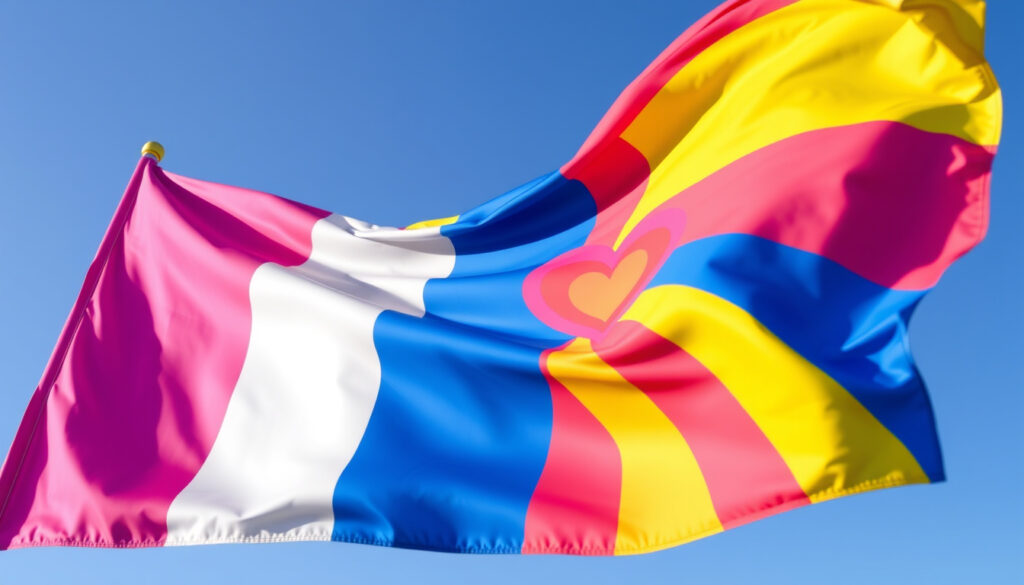
The pansexual flag consists of three horizontal stripes of equal width. The top stripe appears in pink, representing attraction to women and female-identifying individuals. The middle stripe is yellow, symbolizing attraction to non-binary, gender-diverse, and gender-nonconforming people. The bottom stripe appears in blue, representing attraction to men and male-identifying individuals.
The flag originated in 2010, though the exact creator remains debated in various online sources. It serves as a visible symbol allowing pansexual individuals to express their identity and connect with community. Like other pride flags, it provides a recognized visual marker during events, online spaces, and personal expression.
Flag Color Meanings
- Pink (top): Attraction to women, femininity, and female-identified people
- Yellow (middle): Attraction to non-binary, gender-diverse, and gender-nonconforming individuals
- Blue (bottom): Attraction to men, masculinity, and male-identified people
Famous Pansexual Celebrities and Examples
Several public figures have identified as pansexual, increasing visibility for the orientation. While comprehensive lists from recent years remain limited in available sources, historical figures like Walt Whitman have been noted for expressions of pansexual-like attraction in biographical analyses. The What We Do in the Shadows cast includes actors who have spoken publicly about pansexual identity, contributing to representation in entertainment media.
Media representation has expanded considerably during the 2020s, with more celebrities openly discussing their pansexual identity. This increased visibility helps normalize the orientation and provides role models for those questioning their own identity. However, specific celebrity identification remains a personal choice, and not all pansexual individuals choose to publicly label themselves.
Understanding Pansexual Attraction
Pansexual attraction follows patterns similar to other sexual orientations. Attraction develops through a combination of biological, environmental, and psychological factors, often becoming recognizable around puberty. Like anyone else, pansexual people experience crushes, romantic interest, and sexual attraction based on individual preferences and connections.
The orientation does not require acting on all possible attractions or imply non-monogamy. Pansexual individuals can and do form committed, monogamous partnerships. The label describes potential attraction patterns, not relationship style or behavior.
Is Pansexuality a Legitimate Orientation?
Pansexuality is recognized as a valid sexual orientation by major LGBTQ+ organizations and health institutions. GLAAD describes pansexual as an orientation not limited by gender, and organizations like the American Psychological Association acknowledge its legitimacy. The orientation meets the same criteria used to define other recognized sexual orientations.
Despite institutional recognition, misconceptions persist. Some people question whether pansexuality represents a “real” orientation or suggest it merely describes bisexuality under a different name. These views contradict established understanding from health professionals and LGBTQ+ advocacy groups who affirm pansexuality as genuine.
Common Myths and Misconceptions
A widespread myth claims pansexuals feel attracted to everyone they meet. In reality, pansexuality describes potential attraction to all genders, not universal attraction to every individual. Like any orientation, it indicates capacity for attraction rather than automatic or indiscriminate attraction.
- Myth: Pansexuals are attracted to everyone
Reality: The orientation describes potential across genders, not universal attraction to all people - Myth: Pansexuality is simply bisexuality with a newer label
Reality: While overlap exists, personal preference determines label choice; neither is superior - Myth: Pansexual people cannot be monogamous
Reality: Orientation describes attraction patterns, not relationship structure - Myth: Pansexuality treats transgender people as a separate category
Reality: Transgender describes gender experience, not a gender; pansexuality includes attraction to all gender identities
History and Etymology of the Term
The term “pansexual” derives from the Greek prefix “pan-” meaning “all” or “every,” combined with “sexual.” This etymological root reflects the orientation’s defining characteristic: attraction extending to all people regardless of gender. The word began appearing in psychological and sexological literature during the early 20th century, with sexologist Alfred Kinsey’s work influencing discussions about human sexuality extending beyond societal restrictions.
- Early 1900s: Term appears in psychoanalytic literature describing broad sexual instincts
- Mid-20th century: Alfred Kinsey’s research challenges binary views of sexual orientation
- 1990s: Term emerges in LGBTQ+ contexts as a distinct identity label
- 2000s: Online communities adopt and spread the term widely
- 2010: Pansexual pride flag introduced
- 2020s: Increased celebrity visibility and mainstream recognition
What Remains Clear and Unclear
Pansexuality is recognized by major health organizations and LGBTQ+ advocacy groups as a valid orientation. The core definition—attraction regardless of gender—remains consistent across authoritative sources. The flag colors and their meanings are well documented, as is the Greek etymology of the term.
Population estimates remain imprecise because sexual orientation surveys often combine multisexual identities. The exact origins of the pansexual flag creator remain somewhat unclear. Additionally, research specifically focusing on pansexual experiences, as distinct from bisexual experiences, continues to develop.
| Established Information | Information That Remains Unclear |
|---|---|
| Recognition by GLAAD and health organizations | Precise population statistics |
| Definition involving attraction regardless of gender | Exact origins of the pride flag creator |
| Flag colors and symbolic meanings | Specific cultural trends in the 2020s |
| Distinction from other orientations | Comprehensive celebrity identification data |
The Broader LGBTQ+ Context
Pansexuality fits within the LGBTQ+ spectrum as a multisexual orientation, placing it alongside bisexuality, omnisexuality, and polysexuality. These orientations share common ground in acknowledging attraction to multiple genders, though each carries distinct emphases and definitions. The umbrella term “multisexual” helps group these orientations while respecting their individual characteristics.
The rise of pansexuality as a distinct label reflects broader cultural shifts toward recognizing gender diversity beyond traditional binaries. As understanding of gender identity has expanded, so too have the language and labels people use to describe their experiences of attraction. For those exploring identity, understanding terminology and definitions helps navigate these complex concepts.
Pansexuality and Gender Diversity
The emergence and popularity of pansexuality as an identity label parallels increased recognition of non-binary and transgender people. Some individuals find that existing labels like bisexual do not fully capture their experience of attraction, leading them to identify as pansexual. Others prefer bisexual and interpret it broadly enough to include all genders. Both approaches deserve respect.
GLAAD Reference
“Pansexual: A term used by some people who find that they are attracted to people of all genders and sexualities.”
Summary
Pansexuality describes romantic, sexual, or emotional attraction to people regardless of their gender identity, sex, or presentation. The term combines the Greek “pan-” meaning “all” with “sexual,” capturing the essence of an orientation centered on the person rather than gender categories. Distinct from bisexuality in its emphasis on gender irrelevance, pansexuality explicitly welcomes attraction across and beyond the gender binary.
The orientation is recognized as valid by major health and advocacy organizations, despite persistent misconceptions. The pansexual flag uses pink, yellow, and blue to represent attraction to women, non-binary people, and men respectively. Visibility has grown substantially in recent years, though research specific to pansexual experiences continues developing. Understanding these fundamentals supports clearer, more respectful conversations about sexual orientation and identity.
Frequently Asked Questions
Can pansexual people be in relationships with transgender people?
Yes. Transgender describes gender identity, not a separate gender category. Pansexual individuals can be attracted to transgender people just as they can be attracted to anyone else across the gender spectrum.
What does “pan” mean in pansexual?
The prefix comes from Greek, meaning “all.” Combined with “sexual,” it describes attraction to all genders without gender serving as the determining factor.
Is pansexuality the same as being bisexual?
Not exactly. While both fall under the multisexual umbrella, bisexuality traditionally involves attraction to two or more genders, while pansexuality emphasizes attraction regardless of gender. Some people use the terms interchangeably based on personal preference.
What is pansexual attraction?
Pansexual attraction refers to romantic, sexual, or emotional interest in people that is not determined or limited by someone’s gender identity, sex, or presentation. Personality and connection often matter more than gender characteristics.
How is pansexuality different from omnisexuality?
Both describe attraction to all genders. The potential distinction is that omnisexuality emphasizes attraction across the gender spectrum while acknowledging gender differences, whereas pansexuality stresses attraction regardless of gender. Many people use the terms interchangeably.
Is pansexuality a real sexual orientation?
Yes. Major LGBTQ+ organizations including GLAAD and health institutions recognize pansexuality as a valid sexual orientation. Misconceptions persist, but institutional recognition confirms its legitimacy.
What do pansexual flag colors mean?
The pink stripe represents attraction to women, the yellow stripe represents attraction to non-binary and gender-diverse people, and the blue stripe represents attraction to men.
When did the term pansexual first emerge?
The term appeared in psychological literature during the early 20th century and gained prominence as an LGBTQ+ identity label during the 1990s. The pride flag was introduced in 2010.
Are pansexual people promiscuous?
No. Pansexuality describes potential attraction to people of any gender, not actual attraction to everyone or indiscriminate behavior. Like any orientation, it indicates capacity for attraction, not a particular relationship style or number of partners.
Can pansexual people have monogamous relationships?
Yes. Sexual orientation describes attraction patterns, not relationship structure. Pansexual individuals can and do form committed, monogamous partnerships just like people of any other orientation.
More related posts
 Why Am I Dizzy – Causes, Types and When to Worry
 Are Grapes Bad for Dogs? Toxicity, Risks & Symptoms
 Window Tint Near Me – Shops, Costs, Laws Guide
 Fast and Furious: Tokyo Drift – Hit or Flop? Full Analysis
 Tulsa King Season 3 Release Date: Premieres September 21, 2025
 Thank You in Sign Language: ASL and BSL Guide
 Cast of The Menu: Ralph Fiennes as Chef Slowik & More
 Fish Fry Near Me: Best Dublin Spots, Menus & Delivery